Trump’s Get Out of Jail Free Card Will Cost You
Resistance Media
05/20/2026
Rep. Jamie Raskin has had enough.
He and his colleagues are demanding the removal of pardons from the inventory of Trump’s House of Cons. An end to his criminal pardon spree.
So they have introduced H.R. 8275, The Protecting our Democracy Act (PODA), which prohibits presidents from accepting payments or other benefits in exchange for pardons. The bill opposes executive corruption, promotes transparency and accountability, and reasserts the principle that no president is above the law.
“President Trump and his cabinet are committing daily shocking violations of the Constitution, putting billions of dollars in personal profit, rampant political corruption and the designs of billionaire oligarchs before the basic needs of the American people,” said Raskin, the ranking member of the House Judiciary Committee.
While Trump’s first term was relatively modest in the number of pardons, it did boast considerable MAGA star power including beneficiaries Roger Stone, Paul Manafort and General Michael Flynn.
His second‑term is another thing altogether. A Day One single proclamation granting mass clemency to January 6 defendants wiped away penalties for more than 1,500 insurrectionists. Piled on top are hundreds more bespoke pardons and commutations with a particular affection for some of the most outrageous wire fraud, money laundering and tax and securities-related cases out there.
These pardons have been explicitly bundled with donations, lobbying contracts, and lucrative deals funneled through Trump‑family ventures. An analysis by Democrats on the House judiciary committee found that Trump’s pardons have deprived “victims and survivors of crime” of $1.3 billion in restitution and fines.
No Problem (How will you be paying for this?)
Selling Barack Obama’s Senate seat? No Problem, Rod Blagojevich.
Stole $39 million in payroll taxes from your nursing home employees, while convicted of several wrongful death judgments? No problem, Joseph Schwartz.
Convicted of running a global money‑laundering crypto machine? No problem, Binance founder Changpeng “CZ” Zhao.
Pardons to date rival early‑20th‑century clemency peaks. While more often than not recent presidents have used the pardon sparingly, often to correct systemic injustice, Trump is wielding the power to do exactly the opposite. He is reversing systemic justice.
“Our analysis shows that Trump’s criminal pardon spree is, in addition to everything else, an astonishing giveaway to lawbreakers to keep the money they stole from their employees, their investors, and all the American taxpayers,” said Raskin. “Whoever said crime doesn’t pay has certainly not studied the Trump administration. ”
This has been plainly premeditated. Since returning to office, Trump has effectively dismantled the Justice Department’s main anti‑corruption unit from 40 attorneys down to just two, precisely the office charged with policing federal bribery, pay‑to‑play schemes and abuses of office.
More broadly, within days of his inauguration he fired inspectors general at 17 federal departments and agencies in a single late‑night purge, defied legal notice requirements in the process and replaced career “top corruption fighters” at DOJ and other agencies with loyalists. The very watchdogs who might otherwise investigate his brazen self‑dealing have been systematically removed.
The pattern is clear: the bigger and more sophisticated the fraud, the more likely it is to attract elite lawyers, lobbyists and presidential “mercy”.
Take the Zhao pardon, which is tightly woven into the Trump family’s own crypto business.
Binance’s misconduct was not small‑time: the company and Zhao agreed to pay more than $4.3 billion in one of the largest corporate criminal settlements the Justice Department has ever obtained. DOJ and Treasury describe Binance as having willfully processed millions of illicit transactions for terrorist organizations such as ISIS, al‑Qaeda and Palestinian Islamic Jihad; for Iranian and Syrian clients and other sanctioned parties and for ransomware groups, darknet drug markets, child‑sexual‑abuse content purveyors, and large‑scale fraud and scam operations.
Months before Trump wiped away Zhoa’s conviction, Binance helped execute a $2 billion Abu Dhabi–backed deal using USD1, a stablecoin issued by World Liberty Financial, the Trump family’s crypto platform. Finance also provided technical support that significantly upgraded World Liberty’s infrastructure and public credibility.
Trump and his sons, sitting on large equity and token stakes in World Liberty and about $1 billion in paper gains, stood to profit as Binance’s U.S. fortunes rose and USD1 spread. Trump used the pardon power to wipe away Zhao’s criminal liability.
Trump’s January 6 order, which tossed “full and unconditional” pardons or commutations to more than 1,500 rioters from rank‑and‑file attackers to Proud Boys and Oath Keepers leaders, was a blanket amnesty for political violence carried out on his behalf. It told future mobs that if they shed blood for Trump, he will burn the rule of law to rescue them. It told prosecutors that years of painstaking work can be shredded by one man’s resentment and self‑interest.
Simple amnesty apparently wasn’t enough – not a strong enough message to those who might consider violence in the service of the cause in the future. Loaded with the $1.776 billion settlement he agreed to with himself, he may very well be on the verge of making every rioter a millionaire for their trouble. Other wanna-be militia members can hardly be blamed for asking “How can I sign up?”
The Brennan Center describes two other Trump pardons:
Consider the cases of two corporate executives, Paul Walczak and Trevor Milton. Walczak was convicted of misappropriating over $10 million of his employees’ payroll taxes and Milton was found guilty of securities and wire fraud for misleading inexperienced investors, many of them ordinary people who began investing during the COVID-19 pandemic to make ends meet.
Both were pardoned after Trump received contributions on their behalf. Walczak’s mother attended a $1 million‑per‑person fundraiser at Mar‑a‑Lago, and his pardon application highlighted the donation. Milton contributed $920,000 to the Trump 47 Committee last October. Milton’s pardon frees him from having to pay $661 million in restitution he owed to the investors he defrauded, many of whom suffered the loss of their retirement savings or funds they had borrowed to invest in his company.
Projection and Deflection
On May 7, Sen. Peter Welch of Vermont and Reps. Dave Min and Raul Ruiz of California formally launched a sweeping pardons probe, in an effort to expose corruption. Some observers view the investigation as a first step toward building a legal framework to reverse Trump’s grants themselves.
In a round of letters announcing what Welch called a “bicameral oversight investigation into potential pay‑to‑play schemes around Trump’s pardons,” they demanded that 17 pardon recipients turn over financial records – every deal, every payment, every lobbying contract, every business tie to Trump or his family – so investigators can map exactly how money and influence flowed.
“If they don’t respond, they run the risk of highlighting themselves, of being the subjects of future congressional investigations and creating more of a target on their backs for potential further criminal prosecutions,” Min said, adding that the idea that people can “get around the justice system” after being convicted “gets to the heart of what is wrong with America right now under this administration.”
“Now the victims get hit twice, because not only are the people that defrauded them not serving their time — not paying their debt to society — they’re literally not paying their debts to the people they defrauded,” Min added.
Meanwhile the deflection/projection game continues. Trump’s fraud pardons come at a time when Republicans are supposedly aggressively pursuing . . . fraud.
In Minnesota, Republicans have seized on a cluster of social‑services fraud cases, especially the “Feeding Our Future” child‑nutrition scandal, to portray the state as a hub of “industrial‑scale” fraud linked to Somali immigrants. Trump and his surrogates have repeatedly highlighted the fact that many defendants in the Feeding Our Future and related cases are Somali‑American and used that to justify aggressive ICE actions in Minnesota.
Meanwhile, House Republicans on the Oversight Committee have demanded hearings and documents from the state of California, accusing Governor Gavin Newsom’s administration of “colossal fraud” and “gross mismanagement” for failing to block bogus pandemic-era claims.
Newsom fired back:
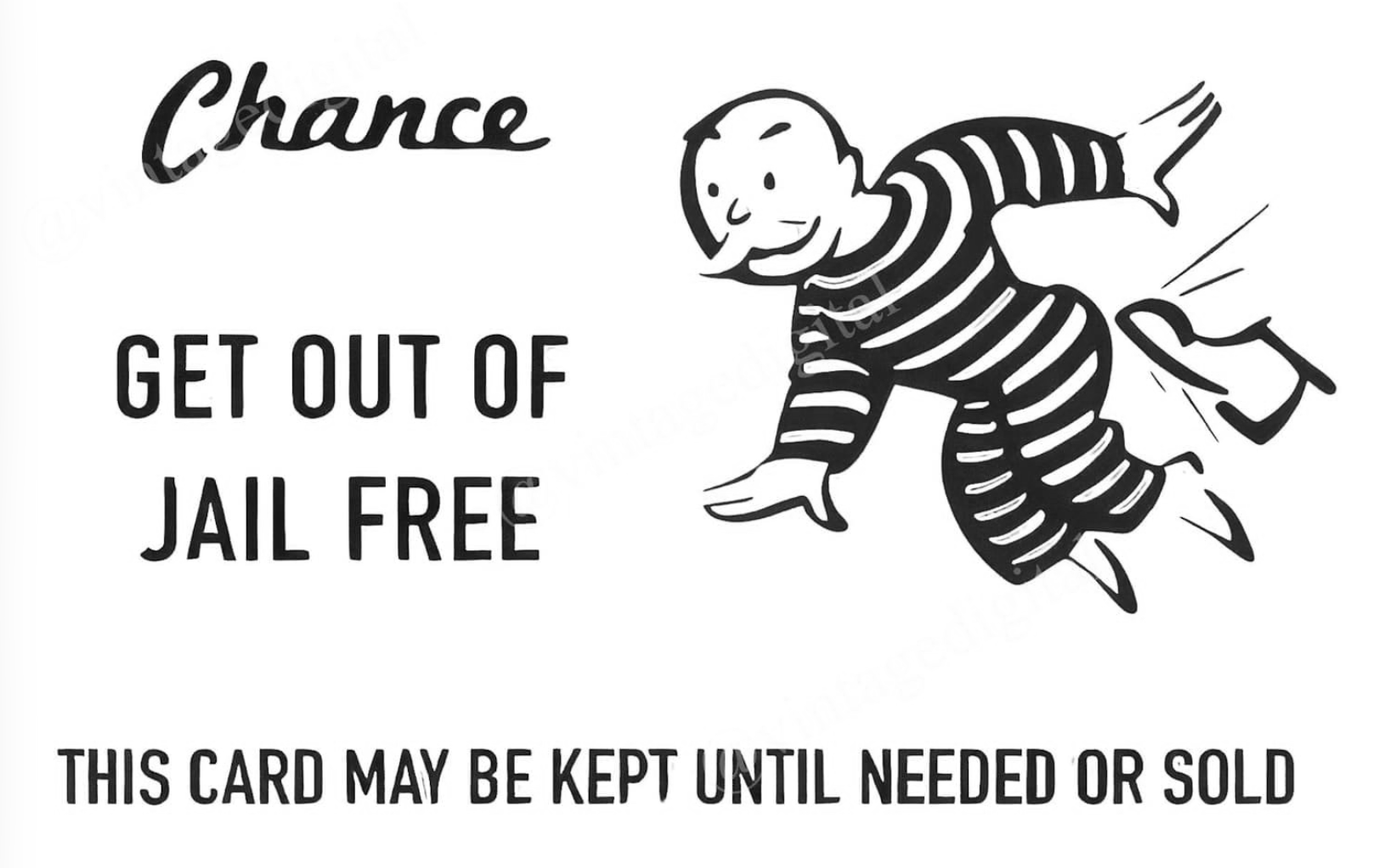
Donald Trump is the personification of fraud. His hypocrisy knows no bounds: he is pardoning people convicted of fraud, corruption, and abusing the public trust — while turning around and using ‘fraud’ as a launching pad to go after political rivals. While his administration hands out get-out-of-jail-free cards to real fraudsters, the federal government is now trying to intimidate and target California with baseless allegations of ‘massive fraud.’ The rule of law isn’t a political weapon — it’s a promise, and we won’t let it be twisted to settle scores.
Every week brings new revelations of graft and venality, with Trump’s personal insider trading scandal and the self-dealing settlement for “victims” of DOJ weaponization breaking in the last week.
In a January YouGov survey highlighted by the Brennan Center, supporters of both parties said their own party “focuses too little on corruption” and named corruption as the single biggest issue being ignored, while an April 2026 YouGov poll found corruption is the top “very serious” problem in the country—ranked ahead of inflation and political division—by 63 percent of Americans across party lines.
David Sirota has argued that “Anti-Corruption Politics May Be the Key to Beating Trumpism”:
For Democrats, this particular moment of cartoonish graft presents a huge opportunity to unify around an anti-corruption platform — one that goes beyond obvious Band-Aids like congressional stock-trading bans and Trump-trolling reforms like prohibitions on foreign government gifts. Their agenda must meet the moment and include game-changing initiatives that let voters know they recognize corruption is pervasive — initiatives that create publicly financed campaigns, broaden federal bribery statutes, and enact a constitutional amendment overturning the 2010 Citizens United decision.
To receive your free weekly snapshot of fact based, uncompromised news, subscribe!
Subscribe to Resistance Media's original reporting on Substack here.