Amy Goodman Wants You To Steal This Story
Pressing Issues
05/08/2026
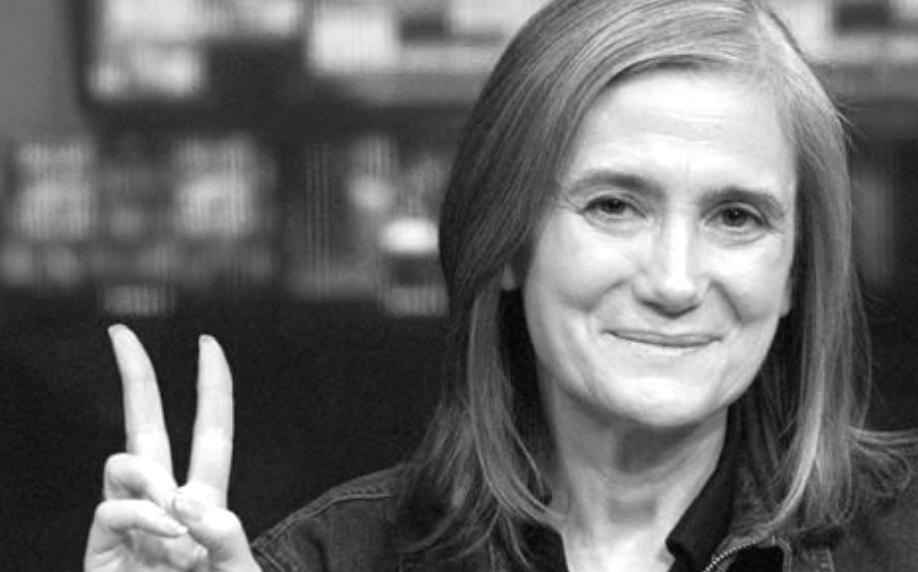
Fiercely independent journalist Amy Goodman has spent three decades holding the powerful to account, building the Democracy Now! newsroom into an indispensable source for groundbreaking news and reporting on war zones, protests and movements the mainstream media too often ignore. In the new documentary Steal This Story, Please!, filmmakers Carl Deal and Tia Lessin craft a riveting portrait of journalism’s power — and peril — in an era of corporate control and political attacks on the truth.
The film screened in Philadelphia on World Press Freedom Day, and I had the opportunity to interview Goodman and the Oscar-nominated directors for a TV special produced for PhillyCAM, Philadelphia’s community-media center. We discussed free speech, media consolidation and the role of independent media in liberation movements. Goodman, Deal and Lessin touring local screenings of the film, which documents Goodman’s storied career in independent media and follows some of her most impactful reporting.
Vanessa Maria Graber: This film underscores the importance of independent media, amplifying the voices of the most underrepresented and holding the most powerful people to account at a time when freedom of expression and press freedom are under attack. At the same time, we’ve seen the dismantling of the Corporation for Public Broadcasting, increased media consolidation, the worsening of the local-news crisis, and increased surveillance and attacks on the press. How do we begin to solve these problems?
Amy Goodman: For anyone who loses hope right now and says, “What are we going to do?” — you’re doing it. You are. The beginning is right here. Local media is so important because you are closest to the story, and you have a good sense of whether something is true or not when you hear it covered. It’s harder when you’re hearing something in Portugal, South Africa or East Timor, and you’re not sure what to make of it, but you do know about Philadelphia, and I really think it all starts here with local media and young people and old.
I think we have to consider how things are done. Older people are getting into media who have been through other careers, and young people who are so fed up with the lies and the lack of authenticity, who have the least invested in the system as we know it and the most invested in making this world a better place for you and us all, are working together at public-access centers like PhillyCAM at a time when the media is consolidating at such a rapid pace. This is where we have to start.
VMG: What’s your vision for the future of independent media? What inspires you and keeps you going?
TL: Amy Goodman and her team at Democracy Now! really inspire me. We watched her show grow over 30 years, from a small radio broadcast that at times operated out of an attic in Chinatown, serving about nine community stations around the country, to now, where it serves 1,500 NPR, PBS, community-radio and television stations. It’s also on the internet, so global audiences can see it and hear it. It’s been a training ground for legions of journalists, and you’ll see some of them in the film. You watch them learn from the master, then go out and start their own independent broadcast, or infiltrate the mainstream. And that’s also subversive.
So I find that inspiring, because with fewer resources than commercial networks, she has done far more, and this is without corporate advertising, without government funding; it’s all from audiences like you. So I hope that Democracy Now! keeps on doing what it’s doing well into the future.
CD: Let’s not forget that Democracy Now! isn’t just leading the independent-media movement; it’s also setting an example for the corporate and commercial media. And we take the name of the film from this idea of trickle-up journalism that Amy advocates for, which is to “Steal this story, please.” As in, “please, take this story,” and you’ll see examples when you see the film of stories that penetrated into the mainstream and broad issues related to liberation movements and change movements into the mainstream or into the commercial media.
AG: Those who care about war and peace, those who care about the climate catastrophe, those who care about equality, racial and economic justice, those who care about LGBTQ issues, those who care about reproductive rights, are not a fringe minority, not even a silent majority, but the “silenced” majority, silenced by the corporate media. It is no longer mainstream. I think these views are the mainstream views of this country, and they have to start being amplified.
To receive your free weekly snapshot of fact based, uncompromised news, subscribe!
Subscribe to Resistance Media's original reporting on Substack here.