An Urgent Message to Indivisible
Resistance Media (03/24/2026)
04/13/2026
Indivisible may be the most important organization in the United States right now.
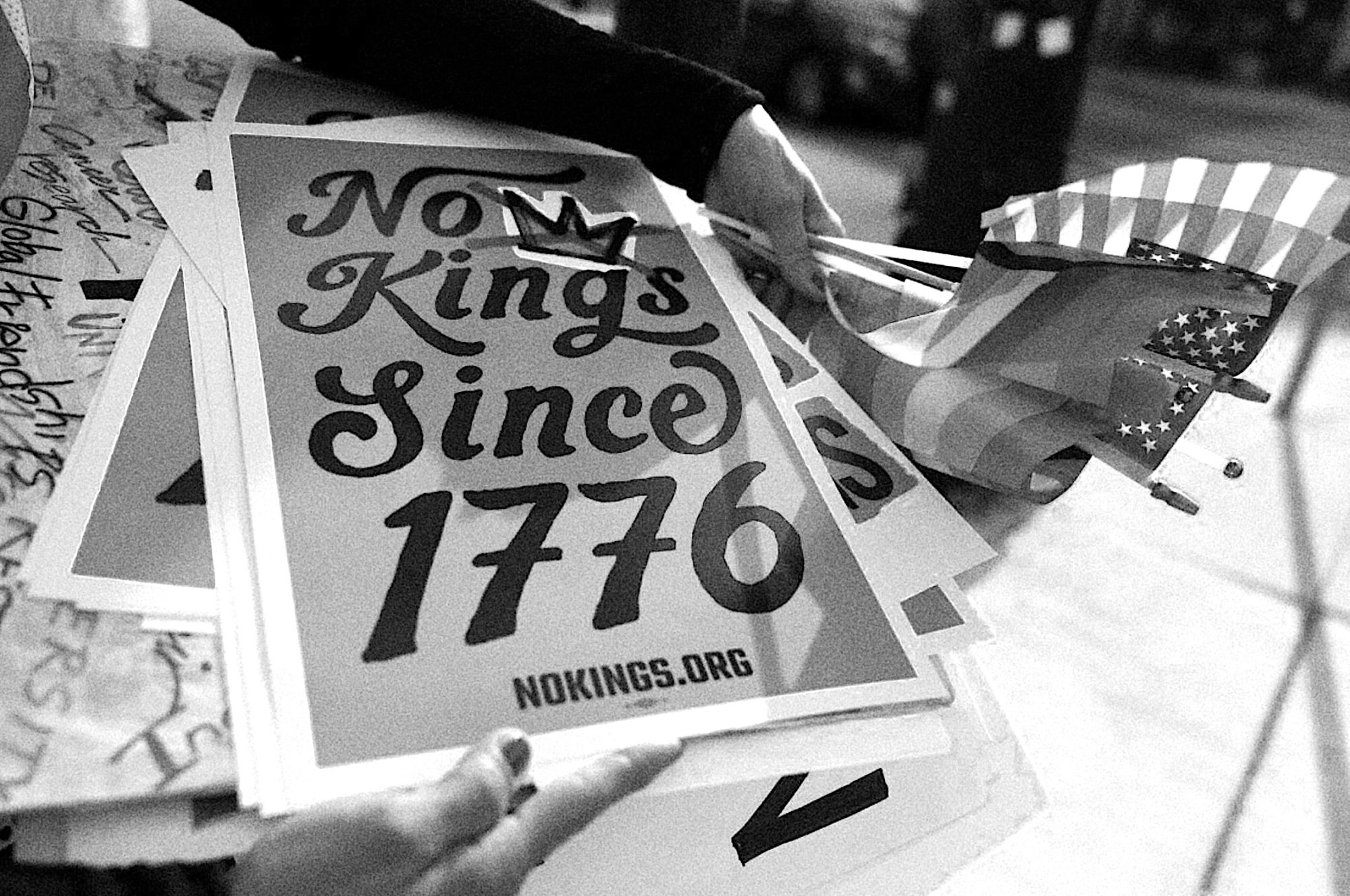
It has achieved something utterly remarkable: it has mobilized more people into the streets than any protest movement that has come before it, with March 28 projected to be the largest single demonstration in American history.
Paradoxically, the very scale of that success carries a strategic danger – that the intoxication of an historic turnout could continue to obscure an unsettling and urgent question:
Is Indivisible prepared for the national emergency straight ahead?
America’s last line of defense to defend democracy is operating with a strategy primarily designed for a functioning democratic system. It is increasingly clear that the country has passed an authoritarian red line.
Have events overtaken Indivisible’s current operating assumptions?
No movement in American history has matched the breadth or speed of what Indivisible and the No Kings coalition have built: an estimated 7 million people at No Kings 2, over 3000 events registered for March 28 – a coalition spanning the AFL-CIO, ACLU, AFT, SEIU, 5051, MoveOn, Human Rights Campaign, Working Families Party, Public Citizen and hundreds of local organizations.
Co-founded in 2016 by former congressional staffers Ezra Levin and Leah Greenberg, Indivisible has grown from a Google Doc into a network of over 2,000 local chapters in every state, three interlocking legal entities, and an 8-million-person email list.
The Threat Environment Indivisible Was Built For
Indivisible’s strategic DNA was forged during the first Trump administration. It is heavily weighted toward constituent pressure on elected officials, town hall disruptions, candidate recruitment, and electoral mobilization. These tactics were calibrated for a republic whose constitutional guardrails at the time – courts, congress, a free press, free and fair elections, were bending but not broken.
A Practical Guide to Democracy on the Brink, the organization’s current strategy paper published in November 2024, builds on that earlier approach that assumes elections will occur and that winning them is the path to democratic survival. Detailed documentation (Brennan Center, Protect Democracy, Democracy Docket) of the Trump administration’s systematic and intensifying campaign to compromise state election machinery, suppress the vote and delegitimize the results, makes that foundation increasingly precarious.
This presents a dilemma. On the one hand, it is vitally important to contend in the local, state and national electoral arenas – to do otherwise would essentially mean “Obeying in Advance,” violating one of historian Tim Snyder’s most important rules.
On the other hand, it is a very real possibility that we are no longer living in a functioning democracy. If that is the case, it is vitally important to prepare for escalating and potentially violent repression as this crisis unfolds.
In Democracy on the Brink, there is no chapter, no protocol, no contingency plan for a scenario in which the administration successfully suppresses or invalidates the 2026 midterms. The Indivisible website added a page last year: “Could Trump Invoke The Insurrection Act? What to know – And How To Prepare,” which educates its membership about what the Act is and what it might look like.
Notably absent from this Insurrection Act document is any call for mass civil disobedience, work stoppages, or explicit non-cooperation.
That Day Has Come
“There may come a day when we conclude the conditions have crossed the threshold into full-blown authoritarianism, and at that point, we’ll all need to shift our strategy. But first, we’re going to give this everything we’ve got.” –Democracy on the Brink, Nov. 2025
Beyond the ongoing attacks on the integrity of the electoral system, full-blown authoritarian threats are in full view.
National Security Presidential Memorandum 7 (NSPM-7) directs executive departments and agencies to implement “a comprehensive national strategy to investigate, prosecute, and disrupt entities and individuals engaged in acts of political violence and intimidation designed to suppress lawful political activity or obstruct the rule of law.”
The memo provides that the Attorney General may designate as a “domestic terrorist organization” any group or entity whose members are engaged in unlawful acts that are “dangerous to human life” and “appear to be intended” to intimidate or coerce the government or civilians.
According to a Reuters report, an Interagency Weaponization Working Group, made up of officials from the CIA, DOJ, FBI, DHS, IRS, FCC, and the Pentagon, has been surreptitiously planning a comprehensive and aggressive campaign to identify targets.
The Washington Post reported that DHS has recently initiated a new $100 million geo-targeted recruitment campaignspecifically aimed at gun shows, NASCAR races, UFC events, rodeos, and listeners of “patriotic” podcasts and conservative talk radio. The goal is to double the number of ICE officers in the next year.
The meme-heavy messaging conveys a “wartime recruitment” drive and frames ICE officers as front-line defenders in a conflict to “defend the homeland.” The campaign reinforces ICE’s paramilitary identity: mobilizing a loyal, ideologically aligned cadre, armed by the state, to enforce a project of ethnic purification and internal enemy-hunting.
The physical infrastructure of mass incarceration is being constructed at a speed and scale with no precedent in American history outside of wartime. ICE’s detained population has already grown from 40,000 when Trump took office in January 2025 to more than 70,000 today, the highest level ever recorded. The Brennan Center documents the agency is on track to add more than 100,000 new detention beds by November 30, 2026.
One Million Rising
Is OMR currently an important but under‑resourced adjunct rather than the central strategic weapon it could be for confronting an authoritarian emergency?
Let’s be clear, One Million Rising (OMR) is Indivisible’s flagship national training and organizing initiative to prepare local chapters to conduct on-going and sustainable actions. It represents a major effort by the No Kings coalition to build a bridge between mass mobilization events and deeper local organizing.
Launched in mid‑2025 as “our recipe to delay, defy, and help defeat Trump,” it aims to train one million people in the strategic logic of civil resistance, community organizing, and campaign design, using Erica Chenoweth’s “pillars of support” framework as its core theory.
The program is delivered as a three‑part national training series plus locally hosted “Resistance Gatherings,” with a second phase built around “Courage Collectives,” small groups focusing on specific pillars like elections, ICE, media, or corporate power.
OMR actions have included boycott campaigns against deportation airline Avelo, pressure on corporations like Tesla and Target, consumer boycotts around media platforms (e.g., Disney/Hulu because of Jimmy Kimmel), and local non-cooperation efforts in Massachusetts and Oregon.
But while coalition partners such as the ACLU, MoveOn, 50501, Working Families Party, and League of Women Voters have been leaders in promoting the initiative, it’s not clear how much national Indivisible staff and funding have been committed to the OMR initiative. That disparity is in stark contrast to the resources devoted to mass mobilization and election‑related activity.
In the tight time frame when Indivisible needs to pivot rapidly to prepare for the challenges ahead, OMR represents the most promising internal infrastructure available.
Solidarity Warriors: Organizing vs. Mobilizing
“The real power comes from what we do after the march. Research shows that no movement with 3.5% of the population in continuous mobilization has ever failed – but only when they go beyond demonstrations into mass noncooperation, noncompliance, and strategic action that dismantles the pillars holding up authoritarianism. That’s exactly what we’re here to build.” —Solidarity Warriors Indivisible Action Group
Colorado’s Solidarity Warriors are essentially a proof‑of‑concept for what Indivisible could become if it more aggressively built local chapter organizing capacity.
On the national side the Democracy on the Brink guide and flagship campaigns are optimized around episodic NO KINGS mass mobilizations and electoral leverage. Trainings like One Million Rising are still generally framed as add‑ons to the electoral focus.
Founded weeks after the 2024 election, Solidarity Warriors has grown into a chapter of 250 active members that drew 46,000–50,000 people to No Kings 2 in Denver. It runs a weekly nonviolence and civil resistance training curriculum, explicitly teaching the distinction between marching as recruitment and non-cooperation as the actual mechanism of change and maintains a partnership with General Strike US. It has operationalized mutual aid, bail funds, and ICE documentation infrastructure.
The national site carries a boilerplate disclaimer that chapter events are not vetted by Indivisible national. In practice, that means a OMR chapter like Solidarity Warriors can innovate within the brand while national retains legal distance.
If national leaned into that, treating chapters like Solidarity Warriors as R&D labs for emergency‑era tactics, could it accelerate the creation of the kind of decentralized, resilient network that NSPM‑7 and related weaponization efforts would find difficult to counter?
The Minneapolis General Strike
Amid the chaos and brutality of the ICE occupation of Minneapolis, that community responded with a level of courage and resiliency that provides both an inspirational and instructional model for other communities that may face the same assaults.
Minneapolis activists wove together an extensive harm reduction network that tracked much of Indivisible’s excellent mutual aid training. In response to ongoing ICE violence, it played aggressive, nonviolent defense in the protection of its neighbors, leading to assaults on many defenders and the tragic murder of Renée Good and Alex Pretti.
The community also played aggressive offense, as Labor Notes describes:
On January 23, Minnesota unions and community organizations seized the public imagination with “a Day of Truth and Freedom,” an economic blackout that drew perhaps 100,000 marchers to downtown Minneapolis.
The Twin Cities have been under siege from federal agents since December.
Minnesotans have formed dense networks from the bottom up to patrol neighborhoods, feed the hungry, and train everyday people to scout for rampaging Border Patrol and Immigration and Customs Enforcement (ICE) agents hunting for their immigrant and citizen neighbors. They upped the ante by organizing a general strike with political demands to oust ICE out of their state, deny it any additional federal funding, and hold legally accountable the officer who killed Renee Good.
A new poll conducted by the firm Blue Rose Research shows that almost a quarter of Minnesotans say they took part in what organizers called “a day of no work, no shopping, no school.” A thousand demonstrators protested at the airport alongside 100 clergy, while a sea of tens of thousands marched downtown, and 1,000 businesses closed for the day.
Could local and national general strikes become a powerful tool for Indivisible to fight back against a new wave of repression?
Minneapolis has shown that it can be done and that it can be effective.
Jacobin argues that as the struggle unfolds at an increasingly rapid pace, initiatives like the Minneapolis general strike demonstrate that tactics that may have been considered impossible in the past are now in play. It writes:
“Popular opinion is changing very quickly in our country. Trump and ICE’s brutal, unpopular actions are not likely to stop anytime soon. Organizing initiatives that might seem impossible today can suddenly become feasible in whirlwind moments of mass outrage and effervescence. Making the most of those openings will depend above all on what we do in the meantime. If we take a lead from Minnesota and pivot nationwide to involve millions of people via winnable fight-backs against ICE, a real general strike can become a reality in the United States.”
Indivisible 2.0?
“Now with the death of Iran, the greatest enemy America has is the Radical Left, Highly Incompetent, Democrat Party! Thank you for your attention to this matter. President DJT” – March 22, 2026
Are Indivisible’s national office, extensive base of local chapters and formidable partner organizations adequately prepared to respond to an aggressive new wave of repression?
Once a crackdown arrives, a distributed leadership structure, underground communications, mutual aid networks and a legal defense infrastructure cannot be improvised. And those pillars would be essential to enable people to absorb repression and keep on fighting.
Unfortunately, Indivisible has little remaining time before events threaten to overtake it. The midterms in November are potentially a flashpoint for the next stage of the authoritarian project.
Should Indivisible tactically sharpen One Million Rising and make it a major prioritized initiative?
Taking inspiration and learning lessons from Solidarity Warriors, along with other innovative chapters and the Minneapolis general strike coalition could be highly valuable in identifying the path forward.
So it must be asked: after NO KINGS 3, is the organization willing to assume the urgent task of developing a “Past the Brink” Indivisible 2.0 strategy?
Indivisible must prepare the coalition for a difficult and more intense period of struggle ahead. In doing so, it can draw on lessons from the movements that have come before. Mass nonviolent civil disobedience has a long, proud and successful history in America. In what follows, we outline some key vulnerabilities and opportunities that such a history reveals for this moment.
Shift and Fortify the Structure
Decentralize Leadership:
Is Indivisible prepared for the inevitability of institutional assault?
It is highly vulnerable – a centralized national organization with a DC headquarters, national bank accounts, several formal legal structures and publicly known leadership. It is precisely the profile NSPM-7’s IRS and DOJ enforcement architecture is designed to target.
Under the current administration’s demonstrated willingness to use RICO statutes, terrorism designations, and IRS enforcement as political weapons against civil society organizations, a single federal legal action could freeze Indivisible’s accounts, enjoin its leadership, and disable its national coordination capacity overnight.
From the public record, Indivisible has published no distributed leadership succession plan, no protocol for operating under federal legal assault, and there is no visible effort to build a resilient decentralized architecture that would allow the organization to survive institutional attack. It is always possible that internal contingency planning does exist.
If the DC office is closed, leadership sidelined and funds frozen or seized, could the result be devastating to the movement?
If such an event triggers the activation of a network of over 2000 autonomous and sustainable independent nodes of activism, capable of initiating local actions as appropriate and of joining national mass actions, the organization would be transformed into a NextGen force difficult to control.
Secure Communication Capacity:
Is Indivisible prepared to defend and maintain the central nervous system of the resistance: its communications capacity?
The Indivisible coalition must build and resource a distributed, resilient independent communications infrastructure (encrypted mesh networks, low-power community radio, print newsletters, neighborhood landline phone trees) so that if the administration moves against social media platforms or initiates emergency algorithm suppression, the movement’s ability to coordinate is not destroyed.
Indivisible has a dedicated resource titled “Digital Communications Security” that urges members to use end‑to‑end encrypted tools (specifically Signal), strengthen passwords, use two‑factor authentication, and harden devices and accounts used for organizing.
Mutual Aid:
Should Indivisible intensify its efforts to make Mutual Aid a foundational element of infrastructure required for every local chapter?
Indivisible has done an outstanding job in explaining the crucial need of such parallel institutions and providing the education and resources for chapters to move forward. This is the veritable lifeline of a movement under attack, making ongoing actions sustainable and providing resilience to the local community.
Democracy on the Brink explicitly names mutual aid as the core of Chapter 4: “Protect and Prepare,” describing it as “actual, material support for people who are facing material harm.” The national organization has also produced a two-part training series, “Creating Mutual Aid and Community Response Teams,” including material from Stephanie Rearick’s foundational mutual aid framework.
Non Violence Training:
Is Indivisible willing to require that every Indivisible organizer, at every level, in every chapter, complete nonviolence training before any confrontational action?
Participants should be drilled in de‑escalation, accepting arrest without resistance, and maintaining nonviolence under provocation.
The regime’s violence is our most powerful weapon – if we remain nonviolent. Every arrest of a peaceful protester, every soldier at a polling place, any act of state violence, is an act of regime self-destruction, but only if the movement gives them no pretext.
Should Indivisible make preserving nonviolent discipline the organization’s first law, enforced with the same rigor the SCLC enforced in Birmingham?
Legal Infrastructure for Mass Arrests:
While Indivisible’s resource hub and Democracy on the Brink discuss “Know Your Rights” and “bail funds” conceptually, there is no published national plan that answers core questions such as:
Who represents an indicted chapter leader? What happens if a chapter’s bank account is frozen? How will bail, bond, or civil defense costs be shared across the network?
How will the organization triage between immigration, protest, and organizational defense cases when NSPM‑7 is used as a weapon?
Each chapter appears to be left to improvise its own relationships with local National Lawyers Guild attorneys, ACLU affiliates, and ad hoc bail funds, a patchwork that works in blue metros but leaves rural, Southern, and small‑town chapters dangerously exposed.
Coalition partner ACLU has taken the lead and launched the Defending Our Neighbors Fund, a $30 million effort with United We Dream and Abundant Futures to support immigrant legal services nationwide. That fund is not designed as, and does not function as, part of an Indivisible‑specific mutual legal defense network, rather it is a separate ecosystem aimed primarily at immigration cases.
If Indivisible is planning to coordinate actions that place people in direct contact with ICE, DHS, federalized Guard units or federal troops, it will need a robust internal legal safety net. Operating a high‑profile, lightly shielded advocacy network without such a legal defense structure is a significant strategic liability.
Evolve Its Strategy and Tactics
Polling Places as Sacred:
Can Indivisible find specific sites where the regime’s illegitimacy or brutality is most naked and most indefensible?
In 2026, one such site could be any polling place in any city where federal agents appear on Election Day. Indivisible could pre‑position trained, nonviolent, clergy‑led teams at targeted polling locations in battleground states. Their role would be to silently witness and make it impossible for the regime to act without the whole nation watching.
Defection Campaign:
Should Indivisible expand its efforts of building relationships with active and retired military officers, National Guard commanders, and law enforcement leaders who have publicly expressed discomfort with the administration’s direction?
It should reinforce the message that the constitutional oath those officers swore is to the Constitution, not to any individual, and that the movement will publicly recognize and protect any officer who honors that oath under pressure.
Additionally it should identify and cultivate relationships with local business leaders, media figures, sports figures and politicians in an effort to educate and develop broader community support.
Organize the Shop Floor:
Indivisible’s membership skews overwhelmingly toward college-educated, professional-class, mostly white, suburban liberals. The organization has allied with union leadership (AFL-CIO, SEIU, AFT, NEA, National Nurses United, United Electrical Workers, AFGE) but has not sufficiently penetrated the shop floor. In a confrontation with authoritarianism, relationships with national leaders are valuable, but without deep ties to rank-and-file workers, that alliance will always be dangerously incomplete.
Can Indivisible find new ways to engage with the rank & file?
It is the warehouse workers, truck drivers, healthcare workers, and service employees whose withdrawal of labor would be truly paralyzing to the economy and the administration.
Acts of Defiance:
Should Indivisible organize mass, simultaneous, simple acts of defiance that everyone can perform?
Indivisible should focus on acts that are legally unassailable and that force the regime either to back down or to commit an act of repression so visible it destroys its legitimacy.
One such target could be the mass ICE detention infrastructure across America. A Witness Campaign could be initiated: millions of Americans, on a single day, going to the nearest detention facility and standing silently outside its gates. Not blocking. Not chanting. Just witnessing – making the invisible visible, making the monstrous undeniable.
Non-Cooperation, Disruption and Civil Disobedience:
Should One Million Rising expand the scope and nature of its training and actions?
Actions should be announced in advance – nonviolent but disruptive, disciplined and trained as well as economically or politically consequential. Targets should be strategically chosen, feature a mass refusal to cooperate with a specific unjust policy or institution, sustained over time and openly grounded in moral law.
Think thousands sitting down and blocking the entrances to Palantir’s headquarters, disrupting business as usual and highlighting the company’s role in developing and operating a domestic surveillance system. Or an ICE field office. Or a private prison contractor.
Or Congress, highlighting their inactivity and complicit empowerment of Donald Trump.
Actions by local chapters can include boycotts, divestment, consumer and donor strikes, sick‑outs, work‑to‑rule, slowdowns, and localized general strikes, coordinated with unions and worker centers.
General Strike:
Should Indivisible partner with General Strike US?
To do so would put this powerful tactic squarely on the table.
A 2026 general strike triggered by a stolen midterm or Insurrection Act invocation might very well look less like a single synchronized “everyone stays home” day. Instead, it could resemble a layered economic blackout plus civic shutdown, built on the Minnesota “Day of Truth and Freedom” model and scaled nationally.
To receive your free weekly snapshot of fact based, uncompromised news, subscribe!
Subscribe to Resistance Media's original reporting on Substack here.