Content:
Why Authoritarians Fear Moral Resistance
Our Moral Moment
04/30/2026
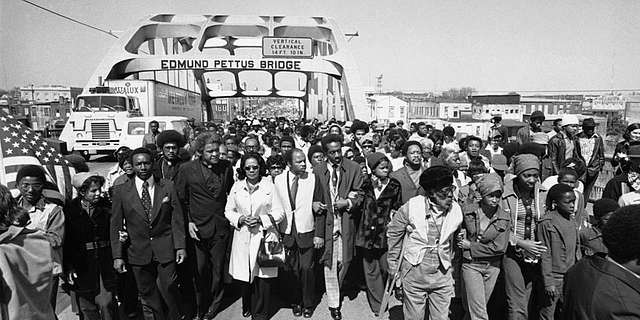
When Lyndon Baines Johnson signed the Voting Rights Act on August 6, 1965, he remarked that it was “a triumph for freedom as huge as any victory that has ever been won on any battlefield.” Less than six months earlier, Johnson had addressed a joint session of Congress to call for voting rights legislation after Americans witnessed nonviolent marchers attacked by mounted police at the end of the Edmund Pettus Bridge in Selma, Alabama. Johnson returned to the US Capitol that August aware that the federal protections he was signing into law would make the United States a multi-ethnic democracy for the first time in its nearly 200-year history.
Yes, US troops had defeated the Red Coats to win independence, put down a rebellion led by plantation elites, and helped defeat fascism in Europe. But as Commander in Chief, Johnson celebrated the moral movement’s successful struggle for the VRA as a triumph for freedom equal to those victories. Here was a hinge point in US history – a declaration in law that the promise of one person, one vote and equal protection under law would finally be made real through elections that allowed all Americans to be represented in their government.
Yesterday, the extremist majority of the US Supreme Court sided with the opponents of the VRA who reject multiethnic democracy as a victory, stripping the protections of Section 2 that remained to defend majority minority districts after Section 5 of the VRA was gutted by the 2013 Shelby decision. Now, in the name of partisan advantage, the highest court in the land says it will allow legislatures to draw districts that deny Black and Brown voters the possibility of electing representatives of their choice.