
We Need to Talk About Soft Secession
The Existentialist Republic
10/03/2025
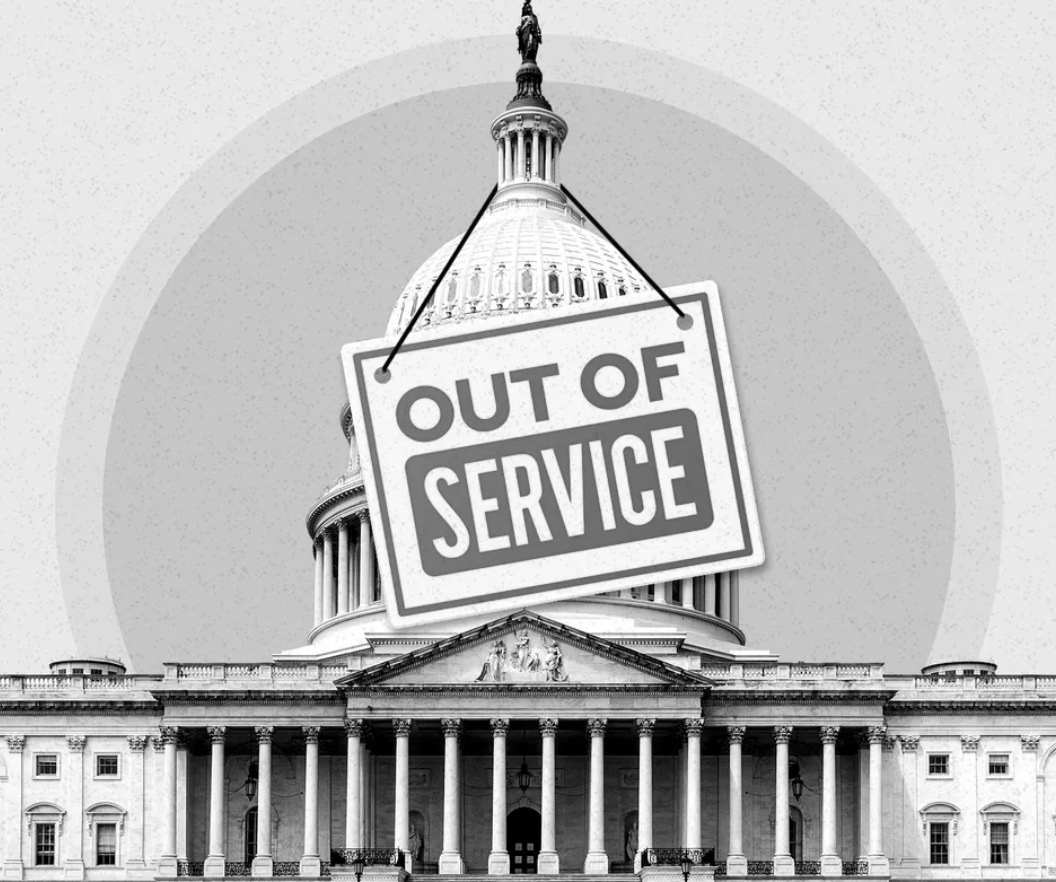
Let’s look at the landscape we are operating from. The federal government isn’t functioning, and Republicans refuse to govern in good faith. They obstruct, defund, and dismantle. Social Security and Medicare are on the chopping block, and federal agents can now racially profile, assault and abduct, citizen or not. SCOTUS has given Republicans carte blanche to ignore any law or precedent. Meanwhile, blue states send billions more to Washington than they get back, essentially funding their own destruction.
But the fact is, our states have the constitutional authority to refuse authoritarianism and build functioning governments. Here’s how we can make them use that authority.
The solution doesn’t require leaving the union or violence. The anti-commandeering principle, upheld repeatedly by the Supreme Court in cases like Printz v. United States and Murphy v. NCAA, means states cannot be forced to enforce federal law. Red states have used this for years on guns and abortion, and now blue states need to deploy it for human rights, social safety nets, and stable functioning governance.
The model already works. When the federal government mandated REAL ID requirements in 2005, 25 states simply refused to implement them. The program stalled for nearly two decades because the federal government couldn’t enforce it without state cooperation. When the federal government classified cannabis as illegal, states legalized it anyway. Today 41 states have some form of legal cannabis despite federal prohibition. The federal government backed down because enforcement became impossible.
Between 1780 and 1859, northern states passed personal liberty laws that made the Fugitive Slave Act virtually unenforceable, with only 330 slaves returned despite federal law. More recently, nearly half of U.S. counties have declared themselves Second Amendment sanctuaries, refusing to enforce federal gun regulations.
A good starting point is social safety nets. We need to demand state programs that replace federal benefits when they’re cut, and push for state single-payer healthcare or at least robust public option programs funded independently of federal dollars. The model has strong precedent, one great example is North Dakota’s state-owned bank since 1919, which has been profitable every year and continuously provided the state with financial independence from federal banking systems. By advocating for publicly owned utilities, broadband, and other services, we can generate non-tax revenue that benefits residents with better, cheaper services while creating funding streams for social programs.
Another tool we should advocate for is to support multi-state compacts to pool resources. California, New York, Illinois, and Washington together represent massive economic power and should coordinate to protect their residents. The U.S. Climate Alliance already does this with 24 governors coordinating climate policy independent of federal action, representing 60% of the American economy and proving multi-state coordination works at scale.