They Built It. Now They Want to Bomb It.
Craig Unger (February 24, 2026)
03/02/2026
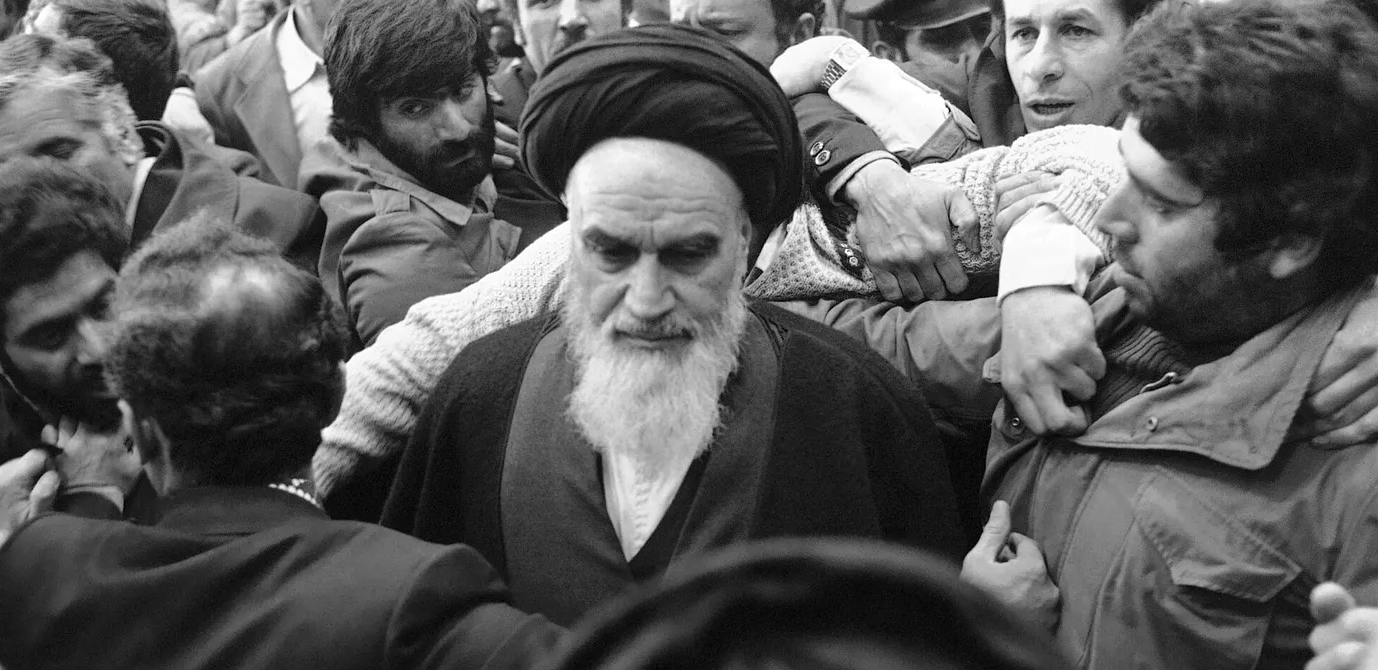
In the nearly five decades since, the Islamic Republic of Iran has executed dissidents by the thousands, imprisoned journalists, and tortured political prisoners in the notorious Evin Prison. It has subjected women to a horrific system of gender apartheid in which they are beaten, imprisoned, and killed for the crime of removing their hijabs. According to CBS News, Yvette Cooper, Britain’s Foreign Secretary, said, “there may have been 2,000 people killed” in recent weeks, perhaps more. And, as if all that were not enough, the regime funds Hezbollah, Hamas, and other terrorist organizations across the Middle East.
How did all that happen to a country with 2,500 years of civilization and a people who are widely considered among the best educated and most cultured in the Middle East?
In large part, the answer lies in the treasonous political crime committed forty-six years ago known as the October Surprise. As I reported in my 2024 book Den of Spies, the October Surprise took place during the 1980 presidential race, when Reagan-Bush campaign manager William Casey made a secret deal with Iran’s militant mullahs regarding the release of 52 American hostages who had been incarcerated since the Shah was overthrown and fled to the United States.
Two things about Casey’s secret deal were particularly disturbing. First, the Republicans were not in power—Jimmy Carter was. As a result, Casey had absolutely no authority to seize control of American foreign policy. What he did was almost certainly a violation of the Logan Act, a federal law that makes it a crime for private citizens to negotiate with foreign governments that are involved in a dispute with the United States.
But Casey’s crime was not merely that he was secretly negotiating with Iran. Not only was he illegally sending arms to a hostile foreign power, he also had one astonishing condition regarding the release of the hostages: He demanded that Iran not release them—at least not immediately. Instead, Casey demanded that the mullahs prolong the incarceration of the hostages until after the November presidential election.
The reason was simple: Casey knew that if the hostages returned before the election, President Jimmy Carter would get credit for it, and a wave of patriotic fervor would likely sweep him back into office. Keeping them imprisoned, on the other hand, allowed the Reagan-Bush campaign to characterize Carter as a weakling who had transformed America into a pitiful, helpless giant.
For all that, one critical aspect of the October Surprise has never been widely noted. Master spy Bill Casey did more than just hand Reagan the White House. His mission tipped the balance of power inside Iran as well.
Remember, Casey’s covert operation was taking place early in the Iranian Revolution. At the time, President Abolhassan Bani-Sadr was officially in power but was in constant conflict with militant clerics.
More to the point, Bani-Sadr, who wanted Iran to be a secular democracy, was desperately trying to release the hostages and open a path toward normal relations with the West, but he was thwarted because the militant clerics, emboldened by their secret partnership with Casey’s team, tightened their grip on power — and never let go.
*****
“That was a very dirty thing to do — using the hostages as a weapon to help Reagan win the election,” Bani-Sadr told me. He refused to play along and told Pasandideh a deal with the Republicans would be “terrible for Iran.” But Pasandideh’s final words were a threat: his refusal, he was told, “would result in my elimination.”
What followed was described to me by Bani-Sadr as “a creeping coup.” Bit by bit, Khomeini and the hardline clerics stripped him of his presidential powers. His supporters were arrested and executed. His newspaper was shut down. His aides were dragged to Evin Prison — tortured, and in many cases killed. One of them, Hussein Navab Safavi, was offered his life if he would denounce Bani-Sadr. He refused. His last words, according to his cellmate, were, “Long live Bani-Sadr.”
In June 1981, Bani-Sadr was impeached by the Majlis( (Iran’s parliament). There were three assassination attempts — on one of which, he told me, two gunmen approached him sheepishly and handed over their weapons, saying they had been ordered to shoot him but couldn’t bring themselves to do it. His house was bombed, his office was attacked, and he eventually fled Iran in disguise. He spent the rest of his life in exile in Versailles.
When Bani-Sadr died in 2021, his obituaries in the New York Times, Washington Post, and The Guardian as well as Reuters and the BBC, among other media outlets, omitted any reference to his most important utterance regarding American politics—namely, his repeated insistence that the October Surprise was real.
In Iran, the brutal, repressive theocracy that Bani-Sadr had warned against was now fully in place. What he had feared most had come to pass: Iran had escaped the Shah’s dictatorship only to find itself in the grip of a theocracy that proved equally unforgiving—and in some respects worse.