Content:
The ‘Putinization’ of US foreign policy has arrived in Venezuela
The Guardian
01/03/2026
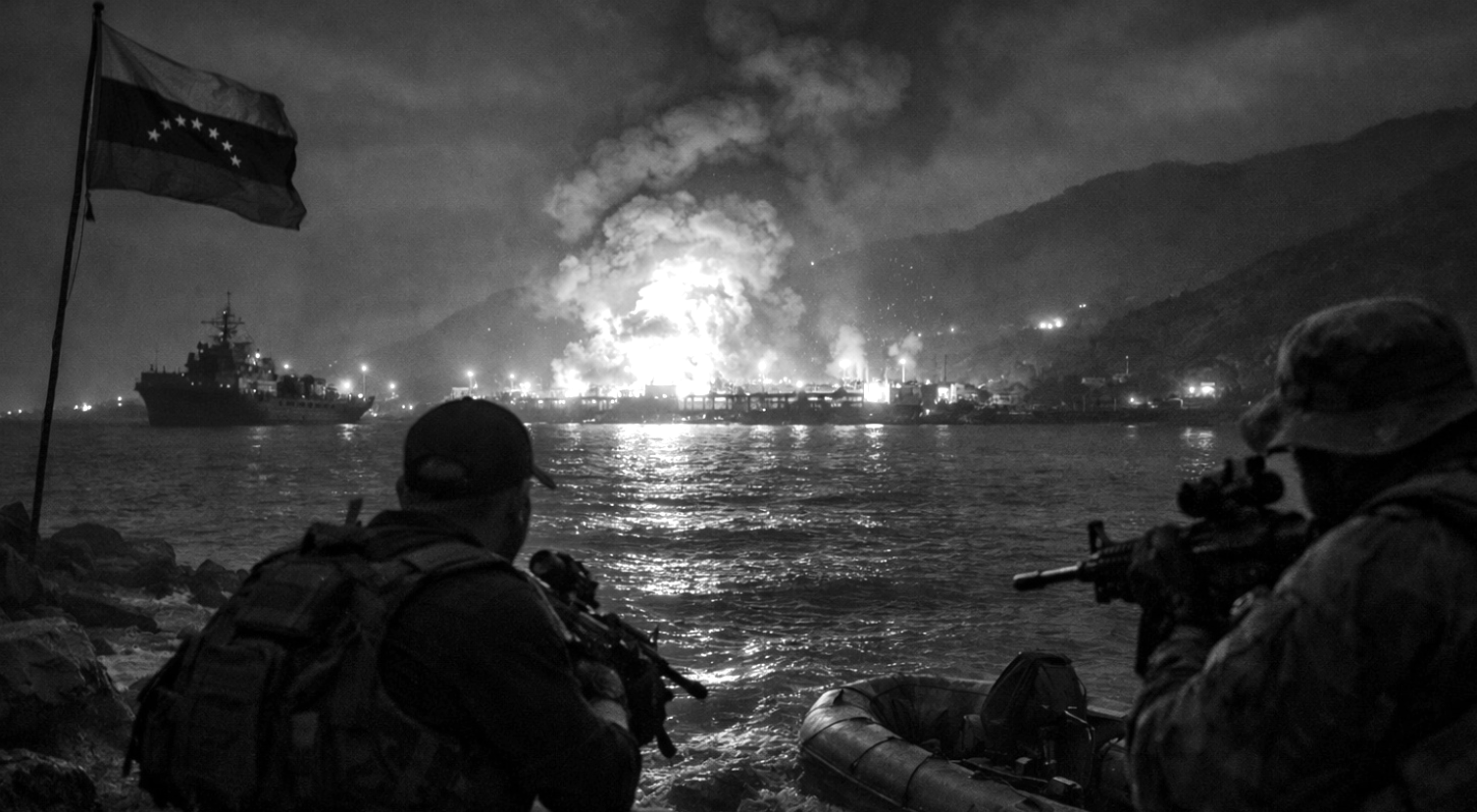
The overnight strikes on Venezuela – and the abduction of its leader, Nicolás Maduro and his wife – have driven another truck through international law and global norms. But even that is not the most concerning thing about it.
Donald Trump has been driving convoys of bulldozers through that increasingly fragile edifice since taking office nearly a year ago, and now it is mostly wreckage. The events overnight were preceded by airstrikes on small boats in the seas off Central America and the killing of their crews based on unproven assertions on involvement in drug trafficking, and the armed seizure of Venezuelan oil tankers on the high seas. It is not yet known how many people were killed in the capture of Maduro.
From the point of view of global stability, the worst thing about the Maduro rendition is that it worked.
Trump’s belief in his own global omnipotence, and his desire to grab the territory and natural resources of other countries has been held in check until now by his fear of entanglement in foreign wars. He claimed (falsely) to have ended eight wars, and his greatest ambition in 2025 seemed to be winning the Nobel Peace prize. Less than a month ago he was brandishing a hastily confected substitute, the Fifa peace prize. That act of self-abasement by world football’s governing body looks even more absurd now than it did when Trump grabbed the gold medal and put it around his own neck.
Trump’s fear of foreign wars seems to be waning. He was clearly thrilled by the drama of the Maduro operation, and the efficiency of the American soldiers who carried it out. For an ageing president, growing more petulant, irascible and incoherent with every day in office – facing diminishing popularity and desperate to distract attention from the Epstein child-trafficking scandal – a tightening embrace of military power is an ominous development.
It is unclear how far Trump intends to go in Venezuela to advance his aims, and how far the current regime is able to resist, but a peaceful outcome seems a remote prospect.
What unfolded overnight in Venezuela will cause immediate anxiety to governments like Iran and Denmark, against whom Trump has expressed enthusiasm for taking radical action.
In recent days, Trump has said the US would come to the defence of Iranian anti-government protesters, and his officials have kept up a drumbeat of threats to take control of Greenland by any necessary means. Last month, the Danish Defence Intelligence Service labelled the US as a security risk, a declaration that would have been unthinkable just a short time ago for a Nato ally.
It accelerates the slide from a mostly rules-based world to one of competing spheres of influence, to be determined by armed might and the readiness to use it. One American commentator, David Rothkopf, called it the “Putinization of US foreign policy”.
Russian commentators have frequently suggested that Latin America lies in America’s domain just as Ukraine was under the Russian shadow. Vladimir Putin thinks the same of much of eastern Europe. Xi Jinping will draw his own conclusions.
The peril made brutally clear in the first few days of 2026 is one that will ultimately be faced by everyone.