
Content:
The Perfect Storm
She Who Stirs the Storm (January 21, 2026)
02/25/2026
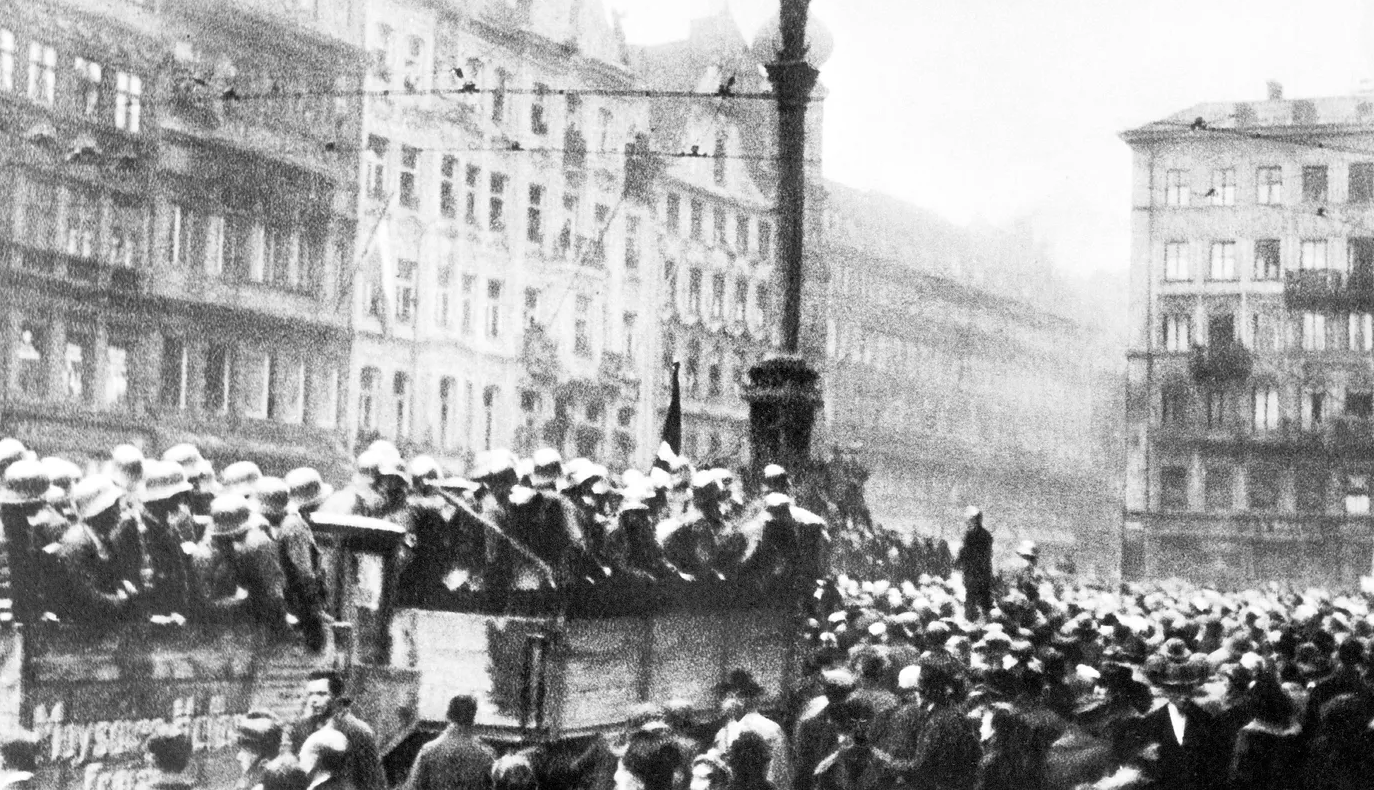
Munich, November 1923, smelled of damp wool and beer. The streets were slick with rain, the kind that seeps into cuffs and makes everything feel a degree more irritable. Inside the Bürgerbräukeller, a low-ceilinged beer hall thick with smoke and impatience, a man with a clipped mustache climbed onto a chair and began to shout.
He was not yet famous. He was not yet inevitable. He was loud, theatrical, angry, and persuasive in a way that made people lean forward without realizing they were doing it. His name was Adolf Hitler, and on that wet November night he attempted, clumsily and prematurely, to overthrow the German government.
The coup failed. The rain washed the streets clean by morning. Munich reopened its cafés. Children went to school. And the German courts, faced with what should have been an unmistakable warning, responded with something closer to indulgence. Hitler was sentenced lightly. Prison became a writing retreat. The failed rebellion became rehearsal.
There were people watching this closely.
Police reports from the early 1920s described Nazi rallies as unusually violent, disciplined, and obsessive. Judges noted the movement’s contempt for the republic it claimed to participate in. Journalists wrote of brownshirted men who lingered outside meetings, memorizing faces, blocking exits, intimidating opponents.
The brownshirts were not simply thugs. They were organized, uniformed, and methodical. They kept lists. They photographed opposition rallies. They learned where people worked, where their children went to school. Violence was secondary to the atmosphere of surveillance, the understanding that you had been seen and noted. This was intimidation as infrastructure.
And always, Hitler’s central narrative was a lie about theft—that Germany had won the war but been betrayed from within, that victory had been stolen by traitors and Jews. The Big Lie, repeated until it became the foundation of everything that followed.
This was not rowdy politics. This was a movement practicing control.
Berlin, at the time, was still electric with culture. Trams rattled past bookstores and cabarets. Intellectuals argued late into the night over cigarettes and black coffee. And among them were men and women who understood that something was going wrong beneath the surface.
Albert Einstein, walking the streets of Berlin in the early 1920s, watched nationalist fervor harden into doctrine. He warned publicly that antisemitism and militant nationalism were not rhetorical excesses but early symptoms. A scientist recognizes a reaction once it has begun.
In Jewish neighborhoods across Berlin and Munich, the warnings were not theoretical. Shopkeepers noticed the boys who stood across the street, watching. Professors read the editorial cartoons and recognized the medieval accusations dressed in modern language. Rabbis counseled families on whether to stay or leave, knowing that either choice might be wrong. By 1933, more than 37,000 German Jews had already emigrated—not because they were cowards, but because they understood the difference between rhetoric and intent. Those who stayed believed Germany was still Germany. They were wrong about the timeline, though not about what was coming.
So did the writers. Thomas Mann, tall, formal, possessed of a novelist’s sensitivity to moral weather, stood before audiences and warned that Nazism was not simply another political option but a collapse of values. He spoke of a Germany losing its soul. By 1933, Mann was gone, watching his country from exile, the Alps between him and the crowd that had stopped listening.
In cafés and lecture halls, a young philosopher named Hannah Arendt was already noticing something else: the loneliness. The way mass movements offered belonging before they offered violence. The way grievance could be turned into purpose. She would later give this phenomenon a name. For now, she simply fled. Germany, by then, had become dangerous to clarity.
Inside the Reichstag, Social Democrats rose one after another to warn that the Nazis were not colleagues but saboteurs. They were shouted down. Called hysterical. Accused of exaggeration. The Communists warned too, though fatally divided from potential allies. The left argued while the right marched in step.