The key to defeating Trump? Mass non-cooperation
The Guardian
02/15/2026
Grassroots agitation nourishes democracy
Those immersed in social movements look at the process of change in a different way than political insiders do. Instead of subscribing to the monolithic view of power, they hold a social view of power, which understands that those in positions of authority are dependent upon the cooperation and support of the governed.
Frances Fox Piven, the great scholar of disruptive action, reminds us that the capacity of people to withdraw their cooperation from the system remains an essential mechanism for securing progress. In a 2022 interview with Democracy Now, Piven argued that landmark movements of the past, from abolitionism to labor to civil rights, succeeded by impeding business as usual: “I think that movements, protest movements, defiant movements, movements that break the rules, are the main lever, the main weapon, that ordinary people have in realizing their aspirations and protecting their democratic rights,” she stated.
In a separate interview we conducted with Piven, she identified the root of our present crisis in a lack of agitation from outside established political structures: “I think that a lot of the tragedy of American democracy is the result of quiescence,” she said. “Agitation and rising up from people at the bottom are good for democracy. They nourish democracy.”
As the tremendously creative organizers in Minnesota have shown us of late, these campaigns from below can be far more varied than the organizing of big marches. In the 1970s, scholar Gene Sharp famously compiled a list of “198 methods of nonviolent action”, emphasizing the many different tactics available to social movements. Yet as comprehensive as Sharp aimed to be, his list could never exhaust the full range of options. New technologies and the inventiveness of on-the-ground organizers have since added many more examples of unarmed interventions. In 2021, Michael Beer, an activist and movement trainer, produced a revised database that almost doubles the contents of Sharp’s famous catalog, including a full 346 tactics.
Now, as then, the list of methods is best seen as an invitation to creativity, reminding organizers they have many tools in their collective toolbox – each with distinctive properties and powers. The potential of civil resistance is not just in holding large demonstrations. It is in drawing from a vast array of strikes, boycotts, noncooperation tactics and artistic protest. And it is in coming up with innovative forms of creative resistance that may never have been seen before.
The potentials of building momentum through these practices are exciting to envision. And our collective future may depend on their realization.
What’s giving us hope now
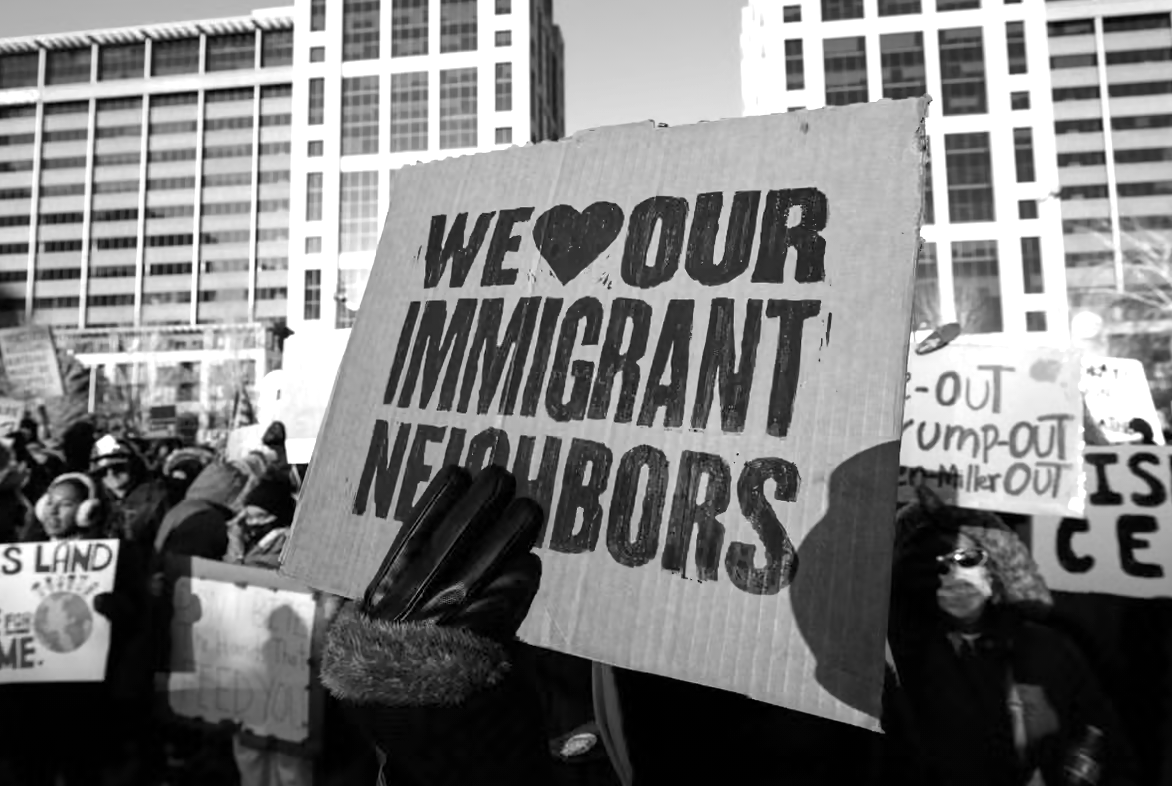
A main error that mainstream detractors make when misjudging the impact of mass mobilizations is assuming that protest tactics are somehow exclusive with other methods for winning progress. Whirlwind moments of grassroots action should instead be seen as opportunities both to alter broader political conditions and draw in new recruits for the ongoing struggle in many arenas. What gives us hope is seeing the type of intensive organizing in Minnesota not only inspire a huge wave of participation beyond the state’s borders – with hundreds of people packing neighborhood trainings in communities across the country on monitoring and resisting ICE –but also go hand in hand with shifts in public opinion that are already becoming evident at the polls, where Trump-aligned candidates are rapidly losing ground. Most recently, we saw this when a far-right Republican was defeated by a Democratic union leader in a Texas state senate district that Trump won by 17 points in 2024. In dark times, these mutually reinforcing gains are encouraging signs, and we will need many more of them.