
On Staying Grounded
The Pause
11/01/2025
This past summer, on Cortes Island in British Columbia, I had the great honor of standing in a forest with Suzanne Simard. You may remember her revelatory conversation with me in 2021. She grew up in a family of foresters and loggers and eventually became a forest ecologist who has utterly shifted our understanding of trees and the vitality of the natural world. Modern forestry saw a forest, like a human group, as a collection of individuals. Simply put, it focused on what the human eye could see looking up and — at a less conscious level, perhaps — applied a logic of Western society. It assumed that trees compete with each other for light and soil. It routinely tore out mature trees to plant marketable, young species, alone and set apart.
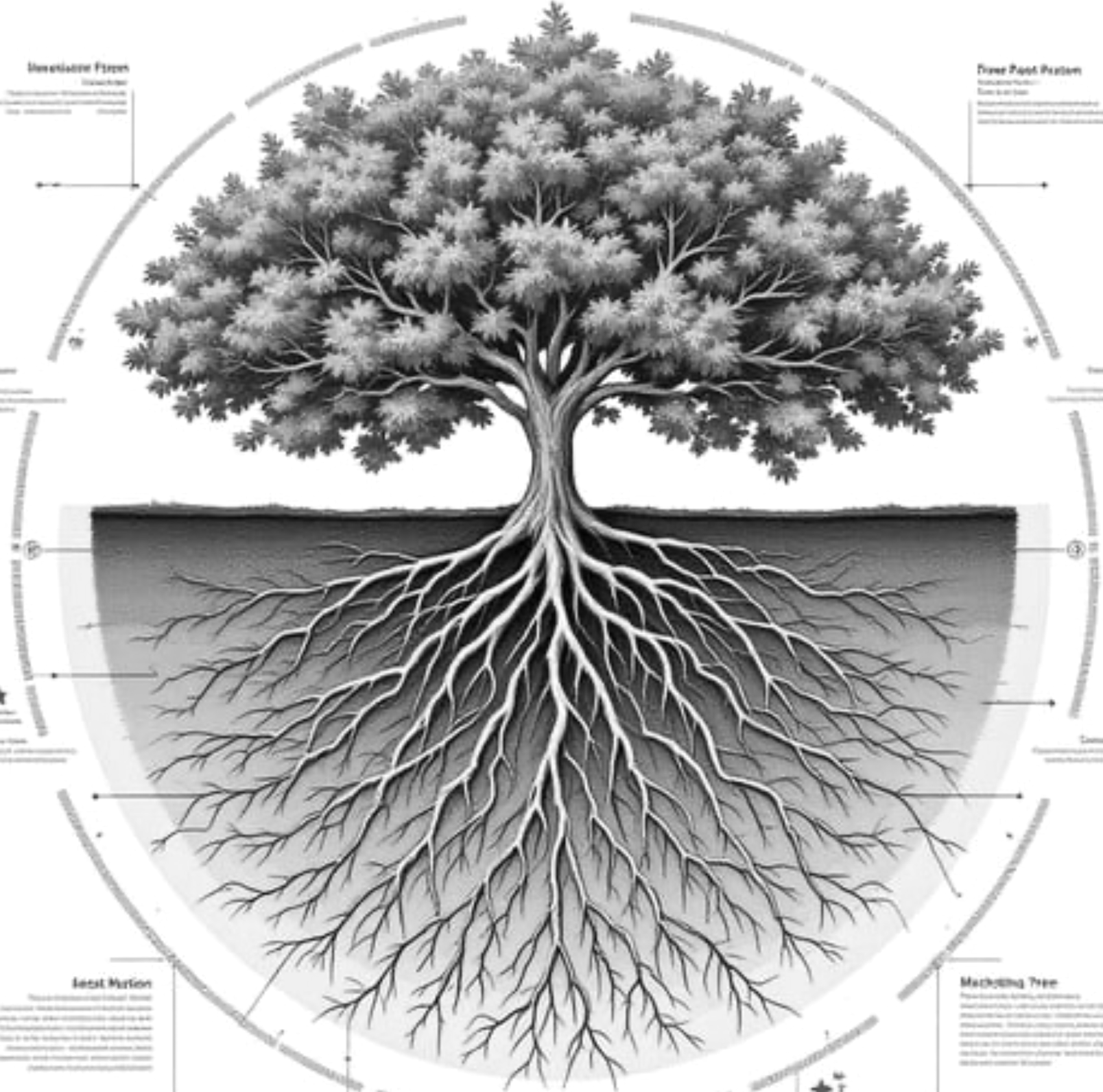
On Cortes, Suzanne trained my vision and imagination down to the ground, where features of the natural world that we’re only now taking seriously are stitching the life of the forest and the life of the planet together: mycelia, fungi, mosses. It turns out that a forest is a single organism wired for reciprocity and mutuality. The oldest hub trees — which she calls Mother Trees — are incessantly sensing “who is rich and who is poor, who is healthy and who is sick.” They communicate, send warning signals, and deliver nutrients — you can hear this with a Geiger counter — by way of carbon and nitrogen and phosphorus and water and chemicals and hormones. One of Suzanne’s most astonishing findings is that these networks of communication and sustenance closely mirror what we’re now able to see in the neural networks of the human brain.
I’m letting all of this enliven my understanding of what it means to stay grounded and vital and whole in this time. For this too is the generative story of our time: We’re on dazzling, revolutionary territory of seeing the workings of vitality inside the body of the Earth and inside ourselves. We’re understanding that we’ve inhabited ecosystems while organizing the modern world around specialization, categorization, mechanization, and the individual. We’ve inhabited ecosystems, that is to say, while organizing around parts.