
Content:
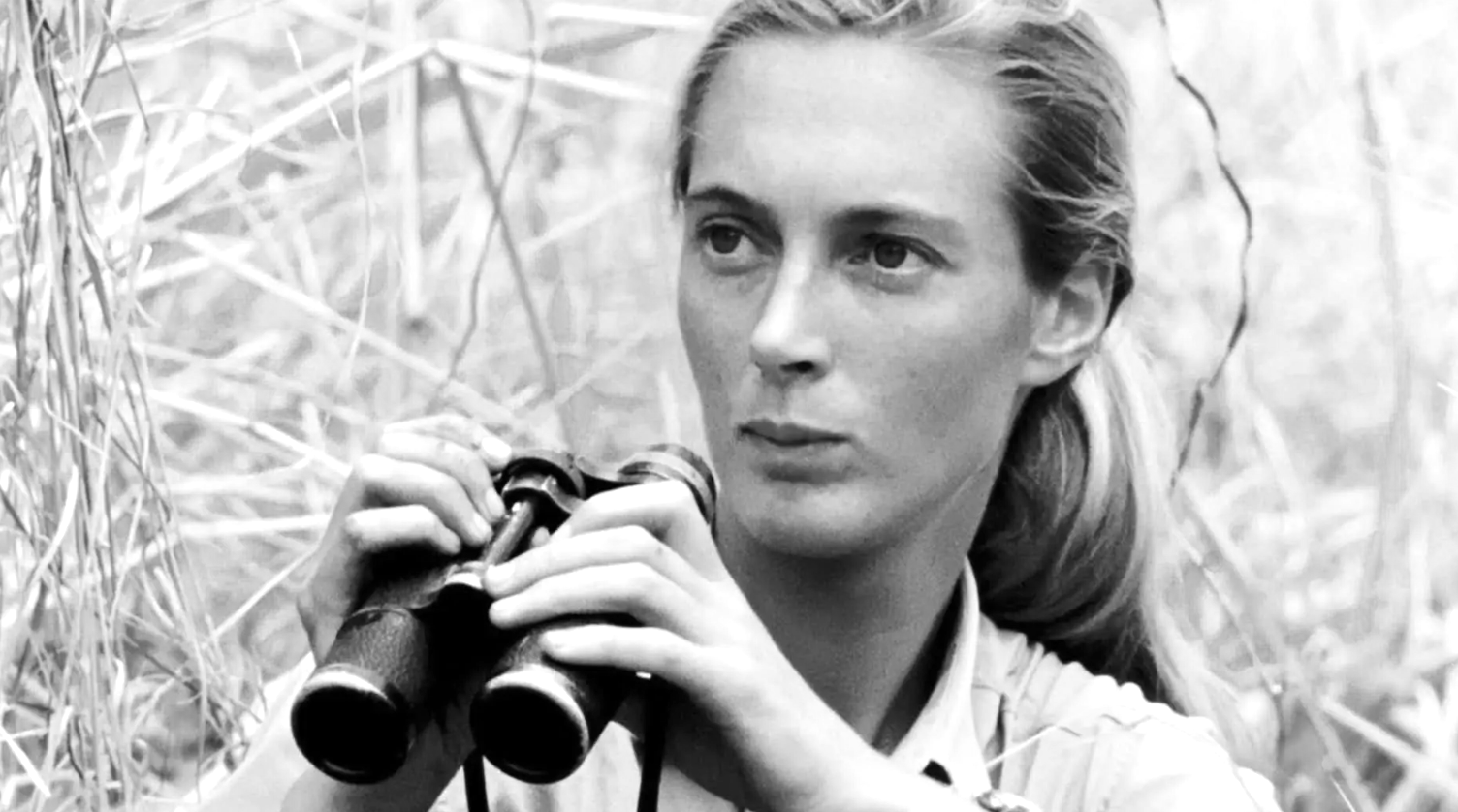
Jane Goodall, legendary primatologist, has died at age 91
NPR
10/01/2025
Chimpanzees seemed to accept Goodall as one of their own, and the public was fascinated by both her easy familiarity with the creatures as well as her groundbreaking discoveries that showed just how much chimps are like humans.
“They kiss, embrace, hold hands, pat one another on the back. They show love and compassion, and they also show violence and have a kind of primitive warfare,” Goodall said. “It’s because the chimpanzees are so like us that we can then say, ‘What makes us different? What makes us unique?’ ”
As a child, Goodall dreamed of living with animals and writing about them.
“That was because I fell in love with Tarzan,” she told WHYY’s Fresh Air host Terry Gross in 1990. “I was terribly jealous of Tarzan’s Jane. I thought she was a wimp and I’d have been much better as a mate for Tarzan myself — which is true. I would have been.”
*****
In just a few months (in Africa), Goodall made a major discovery. Chimps could make and use tools — as she learned by watching a chimp she’d named David Greybeard. (Goodall has called him “my favorite chimpanzee of all time.”) He stripped leaves off a twig, then used it to fish termites out of a mound. Goodall later told NPR that her mentor, Louis Leakey, was impressed.
“He said, ‘Well, it’s always been considered that man is the only toolmaking animal. So we now have to redefine tool, redefine man, or include chimpanzees with humans,’ ” she recalled.
The discovery astonished scientists, but so did the person who made it. Who was this untrained woman, who named her research animals things like David Greybeard, Fifi, Merlin, and Flo? She talked about the chimps like they had emotions and personalities.
“In the 1960s, when she started, there was still a very mechanical approach to thinking about animals,” says Richard Wrangham, a biological anthropologist at Harvard University, who did his Ph.D. with Goodall. “They were regarded as unthinking machines,” he says.
Wrangham says when he thinks of Goodall, he remembers her tremendous empathy for animals and one other thing: “Her rock-solid honesty in describing what she saw.”
She wasn’t afraid to say the chimps had minds. And she didn’t hide their dark side, either. She witnessed brutal assaults, killings, even cannibalism.
As she explained on WHYY’s Fresh Air, it sure looked like warfare. “I was shocked. I was saddened,” Goodall said. “But I realized that, very sadly, this makes them even more like us than I thought before.”
In 1965, she was on the cover of National Geographic, and she and the chimps were featured in numerous popular books and documentaries. To the public, she really had become like Tarzan’s Jane.
But as the years passed, she spent less time in the field, instead relying on students and colleagues. She had a son with her first husband, a photographer, then later married a politician. In 1977, she founded The Jane Goodall Institute, to promote the protection of chimpanzees and the environment.
Goodall’s life changed dramatically in 1986, when she attended a conference of chimp researchers in Chicago and learned how wild chimps were threatened by poaching and habitat destruction, and how chimps were being used in medical experiments.
“I realized I had to stop living selfishly in my own little paradise and use the knowledge I’d gained to do what I could to help,” she later recalled.
Goodall became an activist, traveling almost nonstop to give talks, and returning to her childhood home between trips. It could have been a lonely life, except that she had so many friends around the world.
Sometimes people would ask her, which do you like better, chimps or people? She’d say well, it depends.
“Chimps are so like us,” Goodall said, “that I like some people much more than some chimps and some chimps much more than some people.”