
Content:
Imperial Overreach (w/ Alastair Crooke)
The Chris Hedges Report The Chris Hedges Report
03/07/2026
Chris Hedges
Let’s talk about the missiles. What kinds of missiles are these Iranian-made missiles? Are these Chinese missiles? You talked about an upgrade. Explain what that upgrade was. Also, explain what’s happening now because they’re sending fleets of drones. My supposition is they’re not sending their most sophisticated weaponry, one would expect, so that they can deplete the interceptors.
Alastair Crooke
That’s absolutely, you’re absolutely correct. In fact, what they’re using is the missile inventory from 2012, 2013 at the moment. Very old missiles and simple drones and their purpose is to deplete or to force Israel and the Gulf States to deplete their intercept capacities, which they are doing.
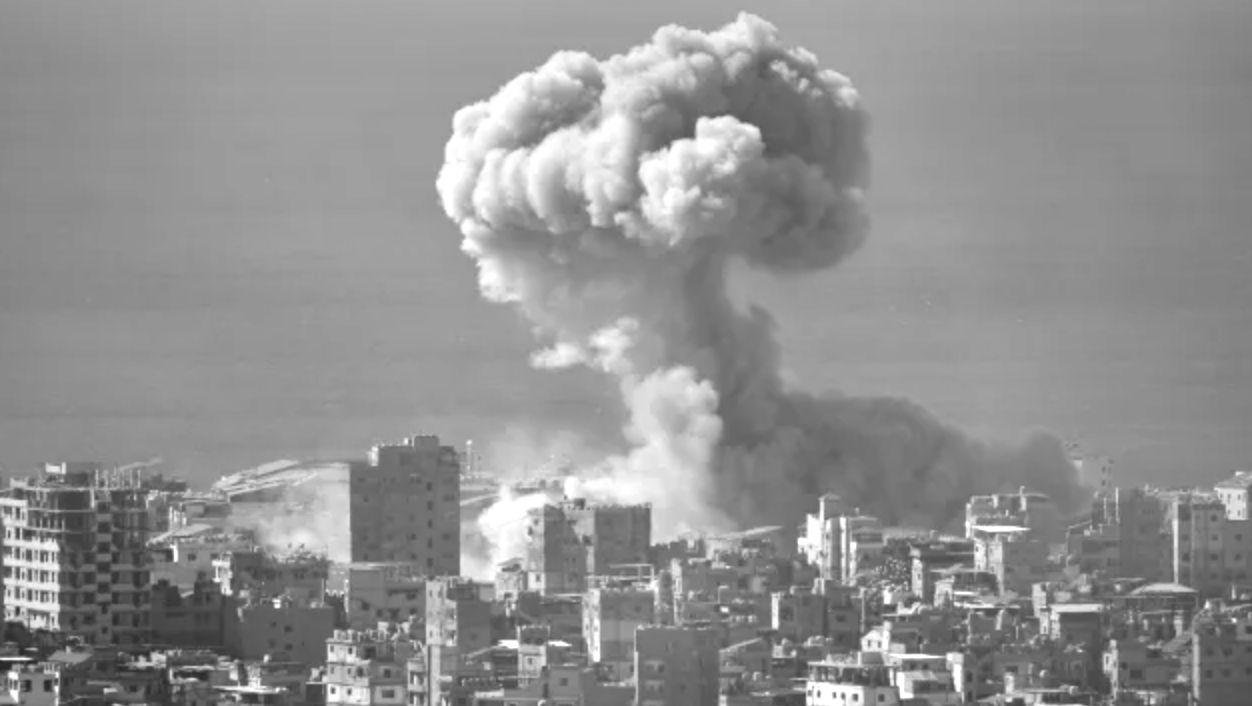
And what we see now is that the Gulf ability to intercept even drones is almost zero. I think Qatar still has some intercept capabilities in the Al Udeid American base there. But otherwise, they are flying freely. Iranian drones are flying freely over Doha and Dubai and they are attacking bases right across the Gulf, particularly in Bahrain. It’s very focused on Bahrain, which houses, it hosts the 5th Fleet, the port, but it hosts an array of intelligence and other areas. So they’ve used these drones and missiles to take out the eyes of the United States.
So they have destroyed these very expensive radar capabilities. About four or five of them, sometimes they cost more than a billion dollars each, but all of these are being systematically destroyed. The only radar capability probably is in Israel at this moment, but the Gulf has lost all its radar capabilities. They weren’t Gulf, these were big radars that could see 500 miles. They were part of the most sophisticated element of the American, if you like, ability to project a battlescape digitally and through their satellites and through their radar systems in a joint approach.
So that was what they were using those drones for to begin with. And they’d said and they’d warned, although it seems to have taken the West by surprise, but Iran was very explicit and said the first focus will be on American bases in the Gulf, in the Persian Gulf. And subsequently they have started and they’ve been moving carefully, still using mainly older missiles.
These ones from made that were made 20 years ago, some of them 2012, 2013 using these older missiles. But now they’ve just moved to the later ones and the later ones are devastating. I’m talking about the Khorramshahr-4, for example, which is a hypersonic missile. It flies at Mach 14. It has multiple submunition warheads in it, which are steerable and like it’s a multiple arrival of 80 of these small, if you like, warheads.
But each of these has a warhead of about nearly 20 kilos. So they’re not huge bombs, but they’re really significant. But if you have 80 of these arriving together, they come more or less bunched, but they come bunched within, say, a radius of about 15 to 16 kilometers total, so wide area. And it’s like being shelled, artillery shelled, by 80 guns at the same time. So it’s very, it’s devastating. And the Israelis, it seems, from all the evidence we see that they cannot down missiles that are traveling at a speed above Mach 4.
So they are not being able to destroy those. They can take down some of the slower missiles, but those slower missiles were fired precisely to draw on the intervening, the ability to fire intervention missiles to try and bring down those.
It’s also very evident that Israel is now using those in prodigious quantities. You can see from some of the videos that have gotten through the censorship that as the Iranian missiles come in, Israel is firing perhaps eight, 10, 12 intercept missiles to try and bring it down. That cannot go on for very long.
Their stocks of these intercept missiles was low after the Twelve-Day War in June. It hasn’t been fully restored because America doesn’t have many of these intercept missiles. And so there will come a time when they will run out. And this is why you see now Iran using fewer missiles, because they say we don’t have to use more because we fire one missile now and it takes down what remains of the intercept capacity of Israel.
So that is why that is what the missiles are. And the Iranians say they also have newer missiles, which they will show and unfold at a later stage. They haven’t reached that stage yet, but that is waiting to be used and deployed at the right moment. They’re quite comfortable that they have huge missile stocks that they can continue for a long war.
*****
Chris Hedges
So there’s heavy military censorship imposed in Israel. You’ve worked there, I’ve worked there. It’s hard from a distance to get a read as to how effective the strikes have been. What are your impressions?
Alastair Crooke
What you say is absolutely correct. The censorship, I mean, it’s absolutely tight. Anyone trying to film is immediately arrested or stopped. It’s very hard to get facts. But I was listening to Colonel [Lawrence] Wilkerson just recently, who was Colin Powell’s chief of staff in that time, a military man with much experience. And he said he had witnessed some real videos coming out of Tel Aviv.
And he said, you know, this is not AI. This is the real stuff that has come through. And he watched a 15 minute video and he said it is absolutely devastating what is coming. It is relentless and it is continuous and you see at the end of it, there aren’t even any intercept missiles firing at that point. So I think we don’t know the extent. This was Tel Aviv, but we know that missiles are being fired across Israel.
But it seems that the damage is huge. What the consequences will be in Israel is not clear. We get very contradictory messages. You’ve probably heard them. Some people in these things, as in every war, you can be in one part and you say, well, nothing’s happening. Everything seems normal. And then you go 500 meters in another direction and it’s mayhem and it is a disaster.
So it’s difficult to get an overall concerted picture, but I would say the damage far exceeds that of the Twelve-Day War even to date. The Iranians intend to slowly increase the number of these Khorramshahr and these hypersonic missiles, which will be very difficult for either the United States or for Israel to shoot them down and to stop them. Big damage is happening there across the Gulf has been huge for American bases. There’s no doubt they’ve been destroyed. I think the intent of Iran in the Gulf, it’s particularly focused on the ports across it.
And I think the reason for that is because the the Fifth Fleet, which is based in Bahrain, has created a sort of a whole area around right up to Hormuz and the Persian Gulf and even down to, if you like, off Yemen, there is a very small choke point, naval choke point, in the South in order to control the corridors of energy to control the corridors of economic business through this process.
And I think the Iranians are in the process of flipping this from [inaudible] right through to Hormuz to reestablish more of an Iranian, if you like, hegemony across these areas and to stop the American plan, which was, I think, foreshadowed in the national security statement. The NSS released not so long ago, a couple, three months ago, something [Under Secretary of War for Policy] Elbridge Colby was supposed to be the author of most of it.
But one of the things it contained in it was the idea that China had to be coerced to change its economic model away from exporting to consuming more. And you could do this by tariffs or you could do this by what we’ve seen in Venezuela, naval blockades, sanctioning of ships, attempts to create a siege. But also Russia increasingly is finding it’s been under the same sort of things. Its so-called shadow fleet being sanctioned, sometimes seized.
And so there is an impression, I think, in both Moscow and China that America is intent on trying to inflict hurt on China through these means, through taking control and establishing a sort of hegemony over the sea lanes and the choke points. The same, of course, in China with that first island continuum, which is being militarized by the United States, presumably to eventually, if needed, be a siege condition on China for vessels passing through that narrow, if you like, seaway by Indonesia into the China Sea.
And for Russia, it’s important too, because they, in the reverse way of China, but they want to export their oil, and do not want that to be under siege and curtailed and squeezed. So we’re seeing a sort of, I believe, a really major geopolitical shift taking place. And so although the focus, we all talk about what’s happening to the military and to the hotels where the military are staying.
But I think Iran’s primary interest is to change the whole situation, the whole paradigm of the Gulf and the Red Sea and the sea lanes adjacent to it and to take those out of the American dominance which they’ve been under for all this period.