
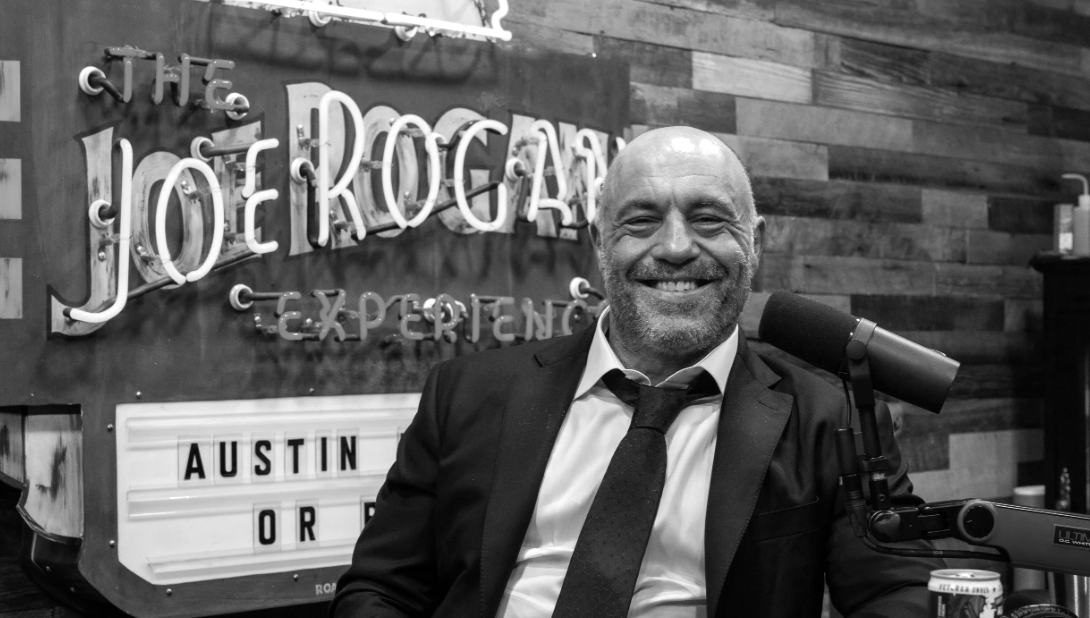
How Joe Rogan Misleads Listeners About Climate Change
Attention to the Unseen
11/07/2025
Joe Rogan has one of the most popular podcasts on Spotify and Apple Podcasts and a combined 50 million followers on YouTube, Spotify, and Instagram. And like nearly all of today’s most popular online shows, Rogan’s spreads climate misinformation.
In an October episode of his podcast, Rogan interviewed two octogenarian fringe climate contrarians, Richard Lindzen and William Happer, who together have been spreading climate misinformation since at least 2012. For over two hours, the trio discussed climate myths and conspiracy theories, many of them identical to the misinformation Lindzen and Happer were peddling well over a decade ago. (See herefor a brief debunking of 19 of the myths raised on the show.)
Five common techniques of climate denial
As Yale Climate Connections reported earlier this year, about one in five U.S. adults and 37% of adults under 30 say they regularly get news from social media influencers — which means they’re likely consuming a lot of myths about climate change.
I asked John Cook, a cognitive scientist at the University of Melbourne studying climate misinformation, how people can distinguish truth from fiction. I worked alongside Cook in the 2010s to debunk climate myths at the volunteer-run website Skeptical Science.
Cook recommends learning about the common techniques that bad actors use to distort the facts.
“Once people spot it in one topic, they can spot it in another,” he explained.
In a new book chapter, Cook and coauthor Dominik Stecula outline the five common techniques of science denial.
- Fake experts: presenting an unqualified person or institution as a source of credible information
- Logical fallacies: arguments where the conclusion doesn’t logically follow from the premise
- Impossible expectations: demanding unrealistic standards of certainty before acting on the science
- Cherry-picking: carefully selecting data that appear to confirm one position while ignoring other data that contradicts that position
- Conspiracy theories: an explanation for a situation that rejects the consensus view in favor of a secret plot by powerful groups with a malevolent goal
Cook calls it FLICC for short. And he says when audiences are on the lookout for FLICC tactics, they are better prepared to notice and challenge misinformation.
Rogan’s podcast often puts FLICC on full display when discussing climate change, so it’s a good example of how the playbook works.