
Content:
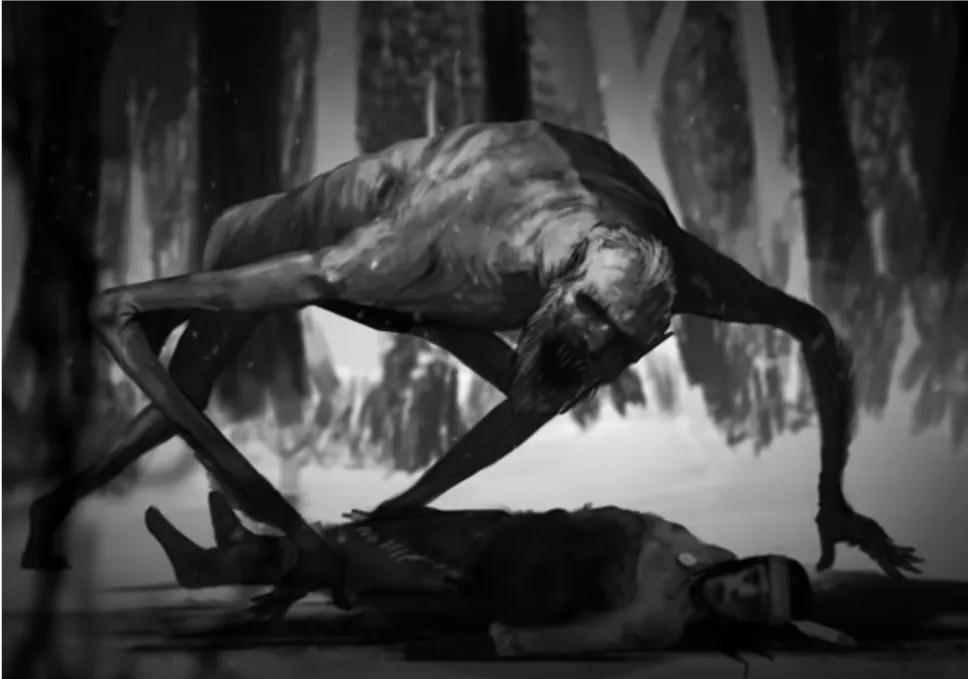
Our Civilization’s Disease Has a Name: Windigo
Ecocivilization (03/20/2026)
05/04/2026
Windigo (also known as Wetiko) is the name given by the Ojibwe to a cannibalistic monster driven by insatiable hunger. The more it consumes, the more ravenous it becomes. It can never be satisfied, because its appetite is not directed toward nourishment but toward devouring for its own sake. For the Ojibwe, the European invaders who arrived on their lands seemed animated by just such a force. Faced with conquistadors who killed, enslaved, and betrayed in pursuit of gold, they recognized a kind of spiritual derangement, a hunger that turned everything it encountered into an object for exploitation.
The Monster Is the System
This metaphor offers a chillingly accurate diagnosis of the dominant system that came to engulf the world. At its heart lies a mode of seeing that objectifies humans and nonhumans alike. Forests become timber reserves. Animals become livestock. Oceans become fisheries. People become labor inputs or human resources. Once the living world is reduced to a stockpile of exploitable assets, moral limits dissolve.
Consider the structural logic of our economy. A corporation that prioritizes its workers’ wellbeing over quarterly returns will find itself outcompeted and eventually eliminated by rivals that don’t. An investor who chooses ecological stewardship over maximum profit will lose out to one who doesn’t. A political leader who proposes genuine limits to growth will be outspent and defeated by interests that profit from the status quo. The individuals change; the behavior persists. That is the hallmark of a systemic pathology — not aberrant actors, but a structure that produces the same destructive outcomes regardless of who occupies its roles.
This is what I call Windigo Inc.: the institutionalization of insatiable hunger as the organizing principle of our civilization. It isn’t a conspiracy. It doesn’t require villains (though it produces them). It’s a self-reinforcing system that rewards extraction and punishes restraint, that transforms every living thing — forests, aquifers, human relationships, the Earth itself — into resources to be consumed in the pursuit of endless growth.
The Spawning of Windigo
This mentality did not emerge from nowhere. My chapter traces a longer history of how hierarchical societies, private property, empire, and militarized extraction progressively formed a five-thousand-year-old “wealth pump,” funneling surplus upward from the many to the few. Virtually all ancient states, early empires, and aristocratic orders organized society around this pattern. But modern capitalism introduced something distinctive and even more dangerous. It inculcated this long history of domination with a worldview that treated nature as a machine, knowledge as power, and limitless accumulation as a civilizational imperative.