
Content:
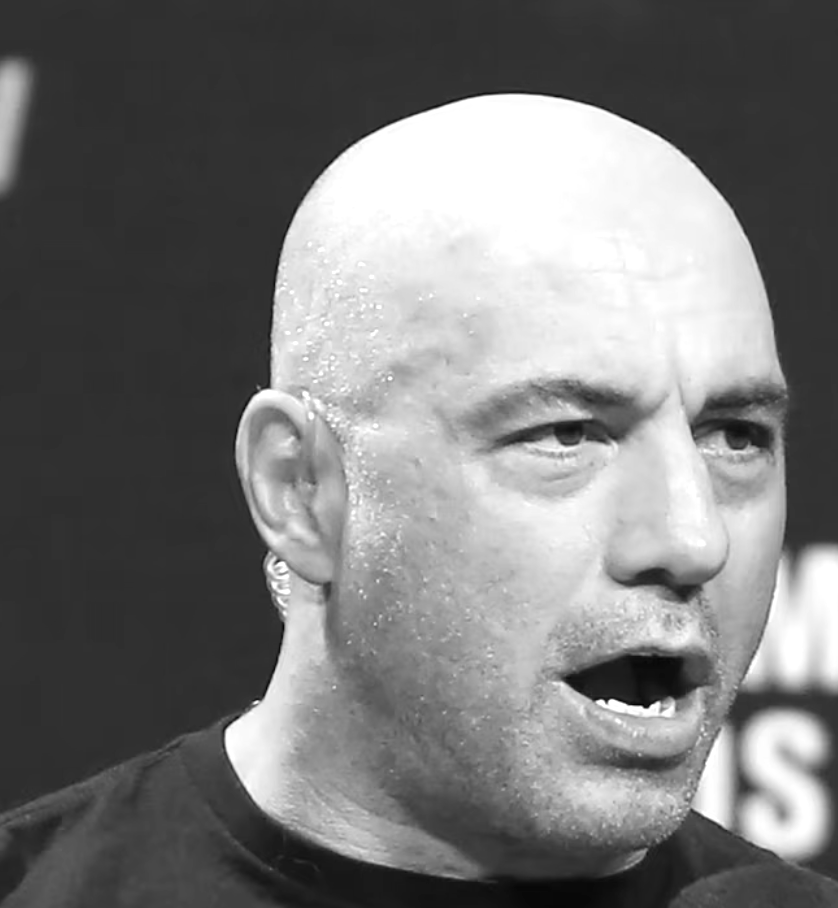
Joe Rogan Trained Men to Accept Authoritarianism
Glass Empires by W. A. Lawrence
01/20/2026
Fifteen months into Trump’s presidency, the psychological conditioning Rogan delivered deepens. Millions of listeners, overwhelmingly male and independent leaning, absorbed dominance signaling, grievance framing, and consequence erasure through Rogan’s show, creating the psychological scaffolding now reinforcing Trump’s authority.
Joe Rogan reaches ten to eleven million people every episode, a scale that matches the country’s largest broadcasters but funnels through one personality who thrives on grievance and performance. His audience includes men who feel discarded by the institutions that shaped their fathers’ lives, dads checking their phones between shifts, and voters who make decisions when they are already exhausted and running on instinct. Rogan taps into simmering resentment built on the idea that feminism pushed men out of the center, that credentials replaced real ability, and that any directness coded as masculine invites punishment. He gives them a place where they never have to look inward, where the world’s failures are always someone else’s fault.
Harris walked into that landscape carrying the authority of her record and the steadiness of someone who knows her work, and that alone made her a target. She represented the kind of competence his audience had been taught to distrust. Rogan spent years elevating strength as a performance, not as responsibility, until muscle tone and swagger felt more credible than law, experience, or integrity. His endorsement mattered because it hit the exact psychological wires he spent years tightening: resentment, wounded pride, and the relief that comes from blaming anyone but yourself.
That weight didn’t accumulate by accident. It rewired how millions interpreted authority, conflict, and truth. Rogan’s guest roster pushed that shift one voice at a time. Alex Jones made paranoia feel intuitive. Jordan Peterson cast hierarchy as the natural state. Bret Weinstein redirected skepticism toward science and turned expertise into a suspect class. Fighters and comedians turned domination into casual entertainment, stripping any sense of civic duty from the performance. Musk treated oversight as a threat to brilliance. Right-wing commentators recast democratic norms as tools of control. The result was a worldview built from repetition: distrust knowledge, admire aggression, evade responsibility, and treat certainty as proof. So when Trump and Musk arrived in 2024, persuasion wasn’t needed. Their presence triggered instincts the show had been hard-coding for years.
The major moments of 2024 exposed how quickly that conditioning can be weaponized. Rogan booked Trump and Musk back-to-back, and the sequence itself functioned as a directive. Trump entered a space designed to amplify power and convert grievance into authority. Musk followed with polished contempt for limits and institutions. Together, they presented hierarchy as destiny, regulation as obstruction, institutions as adversaries, and accountability as punishment. That framing now gives Trump the emotional clearance he needs to accelerate second-year aggression without friction.