Content:
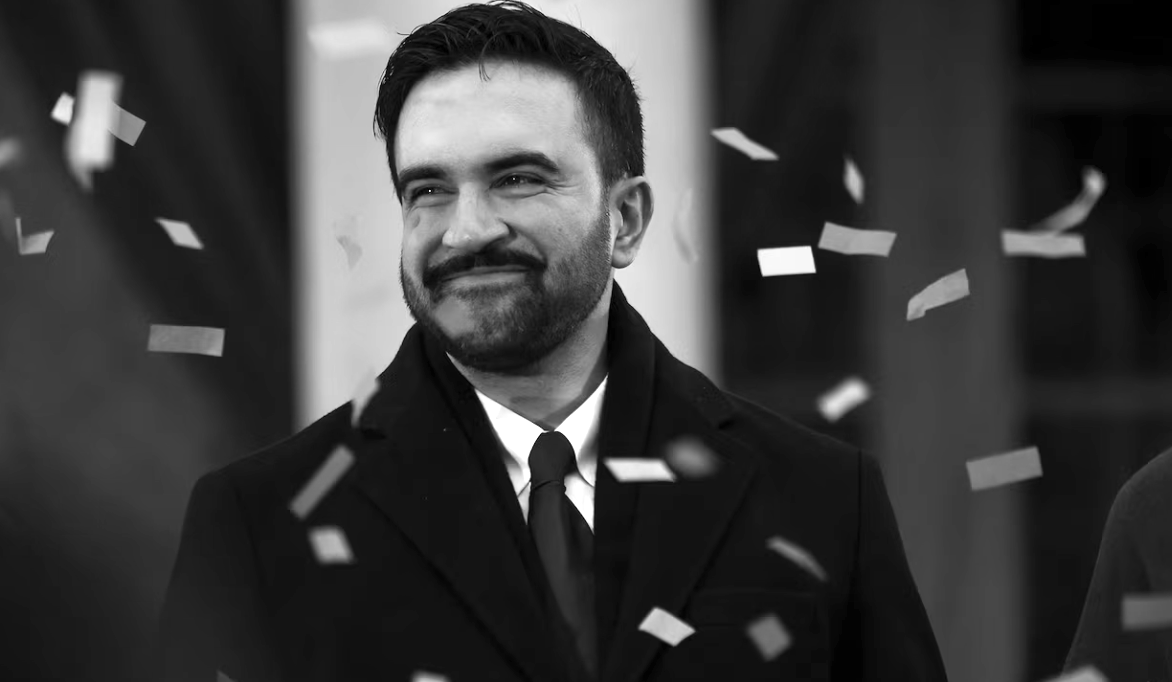
The Full Transcript of Zohran Mamdani’s Inauguration Speech
The New York Times (Gift)
01/01/2026
For too long, we have turned to the private sector for greatness, while accepting mediocrity from those who serve the public. I cannot blame anyone who has come to question the role of government, whose faith in democracy has been eroded by decades of apathy. We will restore that trust by walking a different path: one where government is no longer solely the final recourse for those struggling, one where excellence is no longer the exception.
We expect greatness from the cooks wielding a thousand spices, from those who stride out onto Broadway stages, from our starting point guard at Madison Square Garden. Let us demand the same from those who work in government. In a city where the mere names of our streets are associated with the innovation of the industries that call them home, we will make the words “City Hall” synonymous with both resolve and results.
As we embark upon this work, let us advance a new answer to the question asked of every generation: Who does New York belong to?
For much of our history, the response from City Hall has been simple: It belongs only to the wealthy and well-connected, those who never strain to capture the attention of those in power.
Working people have reckoned with the consequences. Crowded classrooms and public housing developments where the elevators sit out of order. Roads littered with potholes and buses that arrive half an hour late, if at all. Wages that do not rise and corporations that rip off consumers and employees alike.
Together, we will tell a new story of our city.
This will not be a tale of one city, governed only by the one percent. Nor will it be a tale of two cities, the rich versus the poor.
It will be a tale of eight and a half million cities, each of them a New Yorker with hopes and fears, each a universe, each of them woven together.
The authors of this story will speak Pashto and Mandarin, Yiddish and Creole. They will pray in mosques, at shul, at church, at Gurdwaras and Mandirs and temples. And many will not pray at all.
They will be Russian Jewish immigrants in Brighton Beach, Italians in Rossville, and Irish families in Woodhaven — many of whom came here with nothing but a dream of a better life, a dream which has withered away. They will be young people in cramped Marble Hill apartments where the walls shake when the subway passes. They will be Black homeowners in St. Albans whose homes represent a physical testament to triumph over decades of lesser-paid labor and redlining. They will be Palestinian New Yorkers in Bay Ridge, who will no longer have to contend with a politics that speaks of universalism and then makes them the exception.
Few of these eight and a half million will fit into neat and easy boxes. Some will be voters from Hillside Avenue or Fordham Road who supported President Trump a year before they voted for me, tired of being failed by their party’s establishment. The majority will not use the language that we often expect from those who wield influence. I welcome the change. For too long, those fluent in the good grammar of civility have deployed decorum to mask agendas of cruelty.