
Content:
The Long Work of Courage
Piloting Faith: An (Almost) Daily Meditation
12/12/2025
We begin with a confession: Most of us are tired.
We are tired of the cruelty. Tired of the chaos. Tired of watching our shared life shrink under the weight of fear and cynicism. It’s tempting to believe we’ve done enough—to retreat, to grow numb. But this is exactly when courage is most needed: not as spectacle, but as stamina.
The courage required for this age is not loud or heroic. It’s slow, patient, renewable. It’s the kind that takes root in those who refuse to surrender their tenderness. The kind that knows love is still possible, even here.
Robin Wall Kimmerer teaches that “all flourishing is mutual.”1 The long work of courage begins when we remember this truth—that courage is not a solo virtue but a shared metabolism. We are sustained by one another’s bravery. When we act in courage, even quietly, we widen the circle of what is possible for everyone else.
bell hooks described love as “a combination of care, commitment, knowledge, responsibility, respect, and trust.” Courage, at its core, is love in motion. It is the willingness to care when the world insists it’s safer not to. It is the decision to remain committed when every headline screams futility.
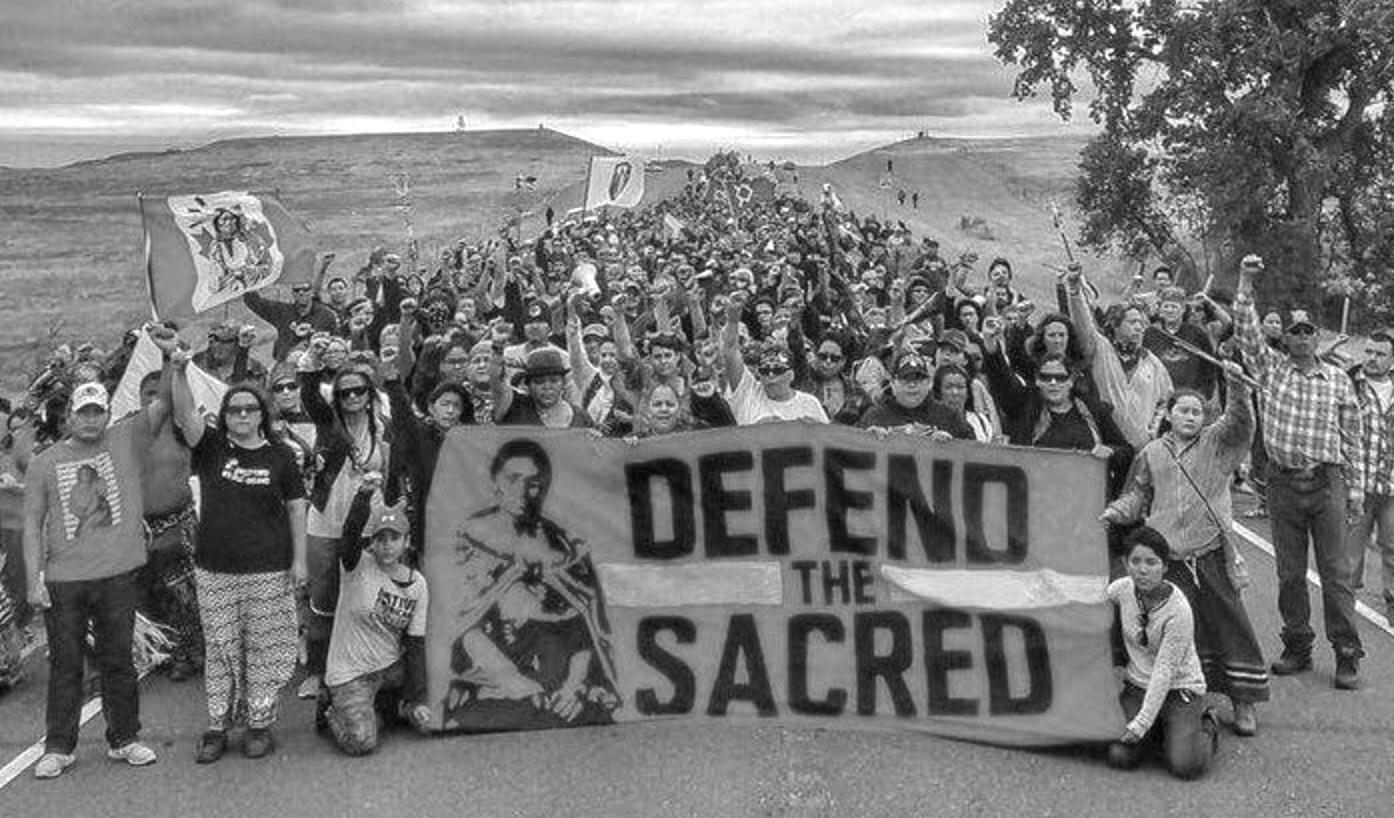
Winona LaDuke once said, “I believe in redemption.”2 She wasn’t speaking of a supernatural rescue, but of our capacity to restore balance — to participate again in the sacred reciprocity of life. The long work of courage is that kind of redemption: it transcends apology and repair alone. It’s participation in life’s ongoing renewal, even when the outcomes are uncertain. It’s trusting that the arc of creation bends not automatically, but through our hands, our hearts, our organizing, our persistence.
This work is slow. It looks like showing up to another meeting, another vigil, another hard conversation. It looks like planting seeds you may never see bloom. It looks like refusing despair’s invitation to isolation.
The Australian activist and elder Lilla Watson said at the 1985 United Nations Decade for Women Conference in Nairobi., “If you have come here to help me, you are wasting your time. But if you have come because your liberation is bound up with mine, then let us work together.” Her words remind us that courage is never charity. It is the deep knowing that our fates are braided together.
Courage, then, is not the possession of the few. It’s the inheritance of the many who remember we belong to one another. The long work of courage is learning to live from that belonging — to refuse both the arrogance of saviorhood and the despair of helplessness. It is the steady rhythm of people who keep choosing life, together, no matter how fragile it feels.
The late theologian and writer Barbara Holmes (Dr. B, to those of us who knew her) reminds us that “crisis is the proving ground of community.” When we come together in the face of fear, something holy stirs between us — an intelligence larger than any one mind, a resilience born from shared spirit. We are reminded that courage is not an individual performance but a collective resonance.
In the end, courage is less about conquest than continuity. It is the art of staying faithful — to the earth, to each other, to the slow evolution of justice — even when the story looks unredeemable. The world is remade by people who, in the long night, simply keep the fire going.