
Content:
The Authoritarian Stack
The Authoritarian Stack (11/21/2025)
12/05/2025
This project maps the “Authoritarian Stack”—a network of firms, funds, and political actors turning core state functions into private platforms. Based on an open-source dataset of over 250 actors, thousands of verified connections, and $45 billion in documented financial flows.
The map aggregates and categorizes information from existing online sources to chart actors, institutions, and their relationships. Data handling and normalization were performed by the Autonomy Institute Data Unit. All entries were manually reviewed and verified. The map reflects connections as of October 2025 and is a living, collaborative resource.
J.D. Vance, propelled to the vice-presidency by $15 million from Peter Thiel, became the face of tech-right governance. Behind him, Thiel’s network moved into the machinery of the state.
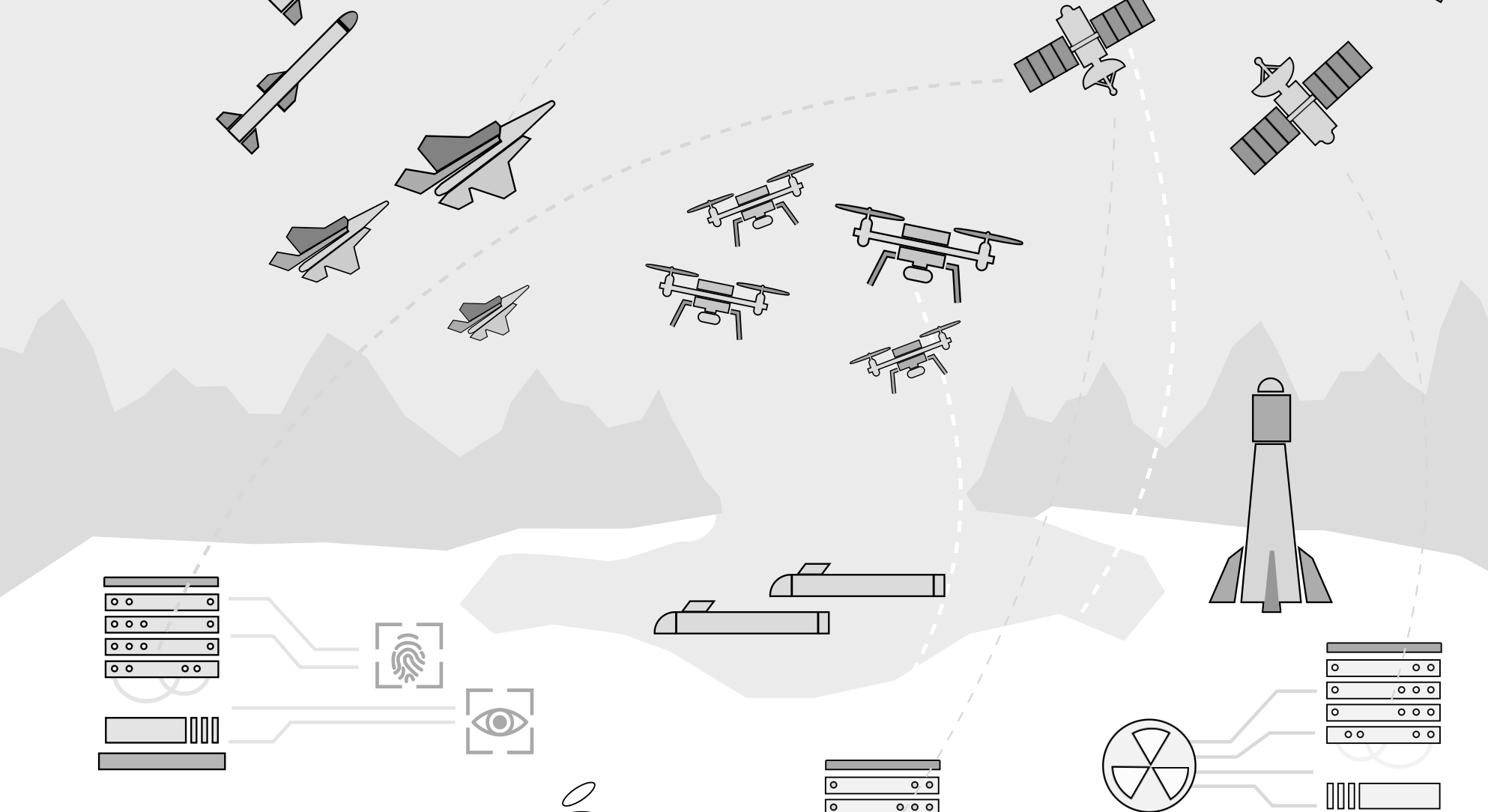
Under the banner of “patriotic tech“, this new bloc is building the infrastructure of control—clouds, AI, finance, drones, satellites—an integrated system we call the Authoritarian Stack. It is faster, ideological, and fully privatized: a regime where corporate boards, not public law, set the rules.
Our investigation shows how these firms now operate as state-like powers—writing the rules, winning the tenders, and exporting their model to Europe, where it poses a direct challenge to democratic governance.
The Pipeline Made Visible
Unlike old authoritarianism built on fear and force, this new system rules through code, capital, and infrastructure — making resistance feel architecturally impossible.
It’s a self-reinforcing loop:
Ideology fuels venture capital → capital captures the state → the state feeds the same private systems that built it. A new model of power — privatized sovereignty.
Silicon Valley’s Authoritarian Tech Right is not theorizing this world. They are already building it. The pipelines are operational. The feedback loops are functioning. The sovereignty transfers are completing.
Democracy persists as a legacy interface— maintained for stability, while being systematically hollowed out and replaced.
The question now is whether democratic societies can recognize this formation for what it is—and build alternatives before the infrastructure of control becomes too deeply embedded to dislodge.